

Tennessee Tech hosts regional cybersecurity competition for fifth straight year
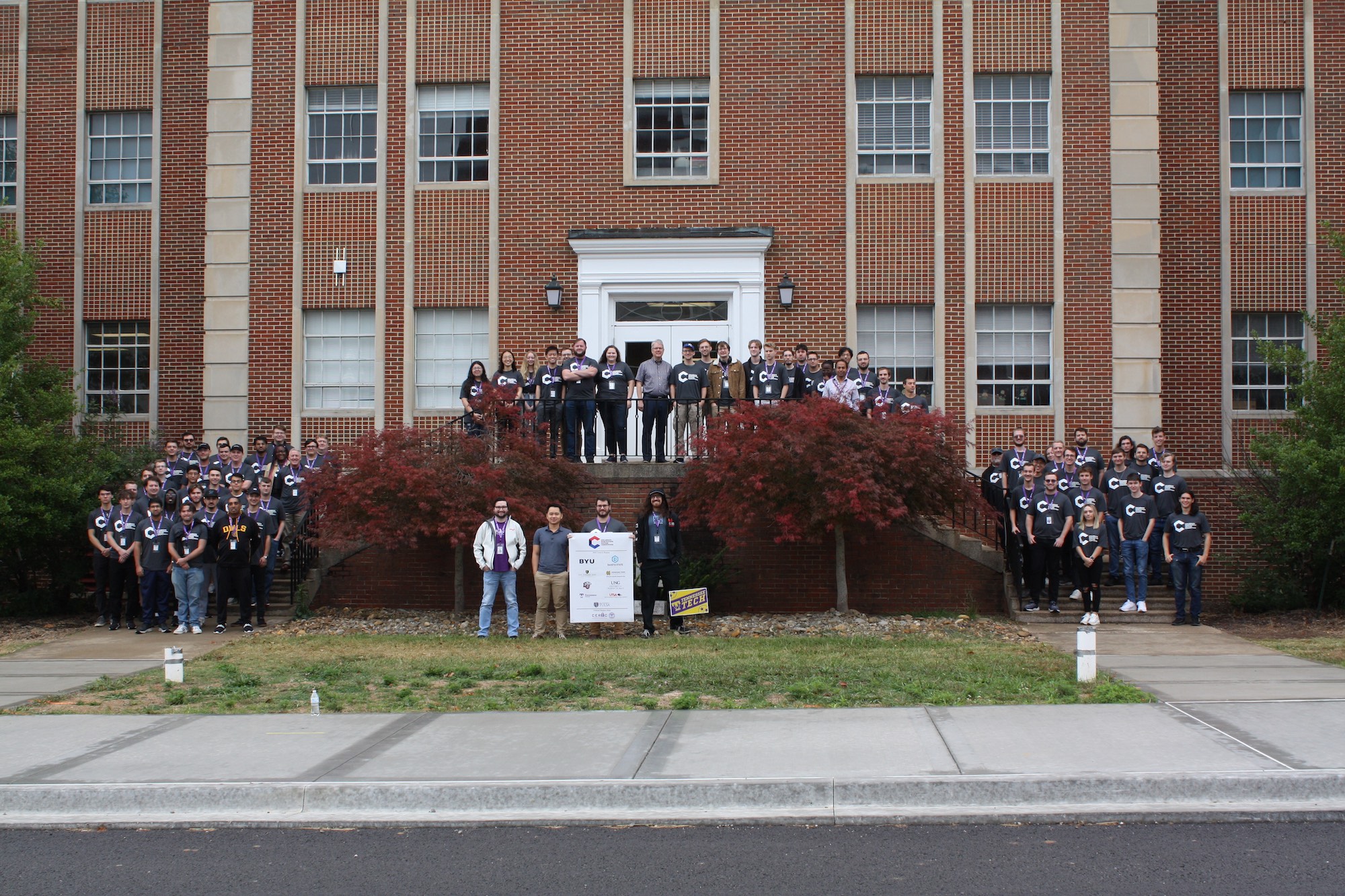
Students from across the central region of the Collegiate Penetration Testing Competition
event traveled to Tennessee Tech for a weekend offensive cybersecurity competition.
Tennessee Tech University’s Cybersecurity Education, Research and Outreach Center
(CEROC) once again hosted Central Region teams competing in the 2023 Collegiate Penetration
Testing Competition (CPTC). Tennessee Tech has served as a host for the region since
2019. Nine teams from seven states converged to earn a spot in the global finals,
to be held later this year.
Teams from the University of North Georgia, Brigham Young University, Kennesaw State
University, East Tennessee State University (ETSU), University of Texas at San Antonio
(UTSA), University of Tulsa, Liberty University and Dakota State University (DSU)
joined Tennessee Tech’s team.
“We were proud to welcome CPTC competitors to Tennessee Tech this weekend. It is always
amazing to walk around and see the competitors brainstorming ideas, sharing cool findings
and interacting with the awesome CPTC scenario characters,” said Jeremy Potts, a cyber
range engineer at CEROC and event co-leader. “Tech continues to cement its place as
a higher-education cybersecurity leader and we hope that every competitor takes something
valuable from their experience on our campus and at the competition.”
Penetration testing is a specialized form of cybersecurity assessment that employs
offensive security techniques to discover vulnerabilities in a system, network or
application. Distinct from traditional defensive security measures, penetration testing
involves a testing team actively simulating cyberattacks to identify weak points.
Crucially, this team operates under a specific agreement with the client, ensuring
the testing is ethical and aligned with the client's objectives.
By conducting these authorized simulated attacks, organizations can understand their
security vulnerabilities comprehensively, enabling them to implement effective countermeasures
to mitigate risks and enhance their overall security posture. CPTC provides a simulation
of such an environment.
As CPTC explains, “Instead of defending your network, searching for flags, or claiming
ownership of systems, CPTC focuses on mimicking the activities performed during a
real-world penetration testing engagement conducted by companies, professional services
firms, and internal security departments around the world.”
A longtime leader in cybersecurity issues, Tennessee Tech was selected by the National
Security Agency (NSA) and National Science Foundation (NSF) as the sole GenCyber camp
in Tennessee and hosts the state's first and largest CyberCorps SFS program. The NSA
also recognizes Tech as a center of academic excellence in cybersecurity – cyber defense
education. The university is home to the Golden Eagle Cyber Certificate program, a
dual enrollment program allowing high school students to take college-level cybersecurity
courses contributing to their post-secondary work.
CEROC focuses on K-20 cybersecurity education programs, research on emerging cybersecurity
topics, and outreach programs to academia, government, and industry stakeholders.
Learn more at www.tntech.edu/ceroc or by emailing ceroc@tntech.edu.