

Tech professor works behind-the-scenes on Disney+ documentary
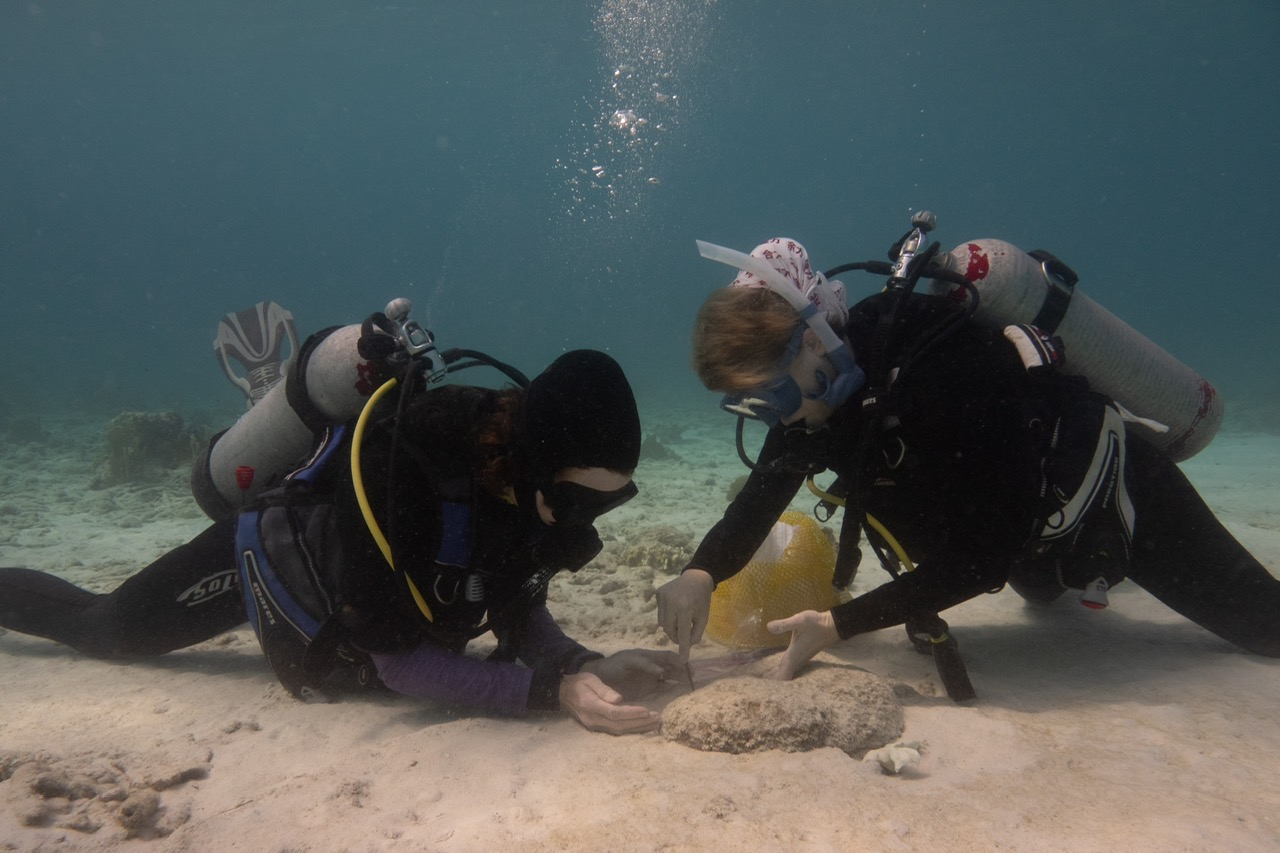
From left: Kristin Hultgren, associate professor of biology at Seattle University
and Carla Hurt, associate professor of biology at Tennessee Tech University, are seen
“under the sea” researching pistol shrimp for a forthcoming Disney+ documentary.
Carla Hurt, associate professor of biology at Tennessee Tech University, has been
busy working “under the sea” for Disney. However instead of mermaids, she has been
tracking Alpheus armatus, also known as the “pistol shrimp,” for a documentary through
National Geographic. Though only two inches long on average, the shrimp can make enough
noise to disrupt sonar scans.
“I was doing some work on a National Science Foundation grant on biodiversity in Guam,
and someone from Wildstar Films contacted us because he’d read an article we’d published
about the diversity in the Alpheus genus,” explained Hurt. “He initially asked if
we had any recommendations for a species to feature in a documentary about ‘underdogs’
in the aquatic world.”
Hurt wholeheartedly recommended the pistol shrimp. This particular crustacean has
one average-size claw and one enlarged claw, from which it gets its name. When the
pistol shrimp snaps this claw closed, it shoots a bullet of energy that reaches up
to 56 miles per hour. When it hits its prey, it stuns it long enough for the pistol
shrimp to make it a meal.
“The snap is like a small explosion. You can actually see a little flash of light,”
Hurt said. “This snap of the claw has been studied by physicists, as it is the fastest
known underwater acceleration of any body movement. Researchers first studied snapping
shrimp in World War II because the sound of the snap was so loud that it interfered
with sonar.”
In addition to catching prey, the large claw is also used for communicating with others,
and possibly has a role in mating as well. These shrimp live in male-female pairs
on one species of sea anemone and defend their home against predators.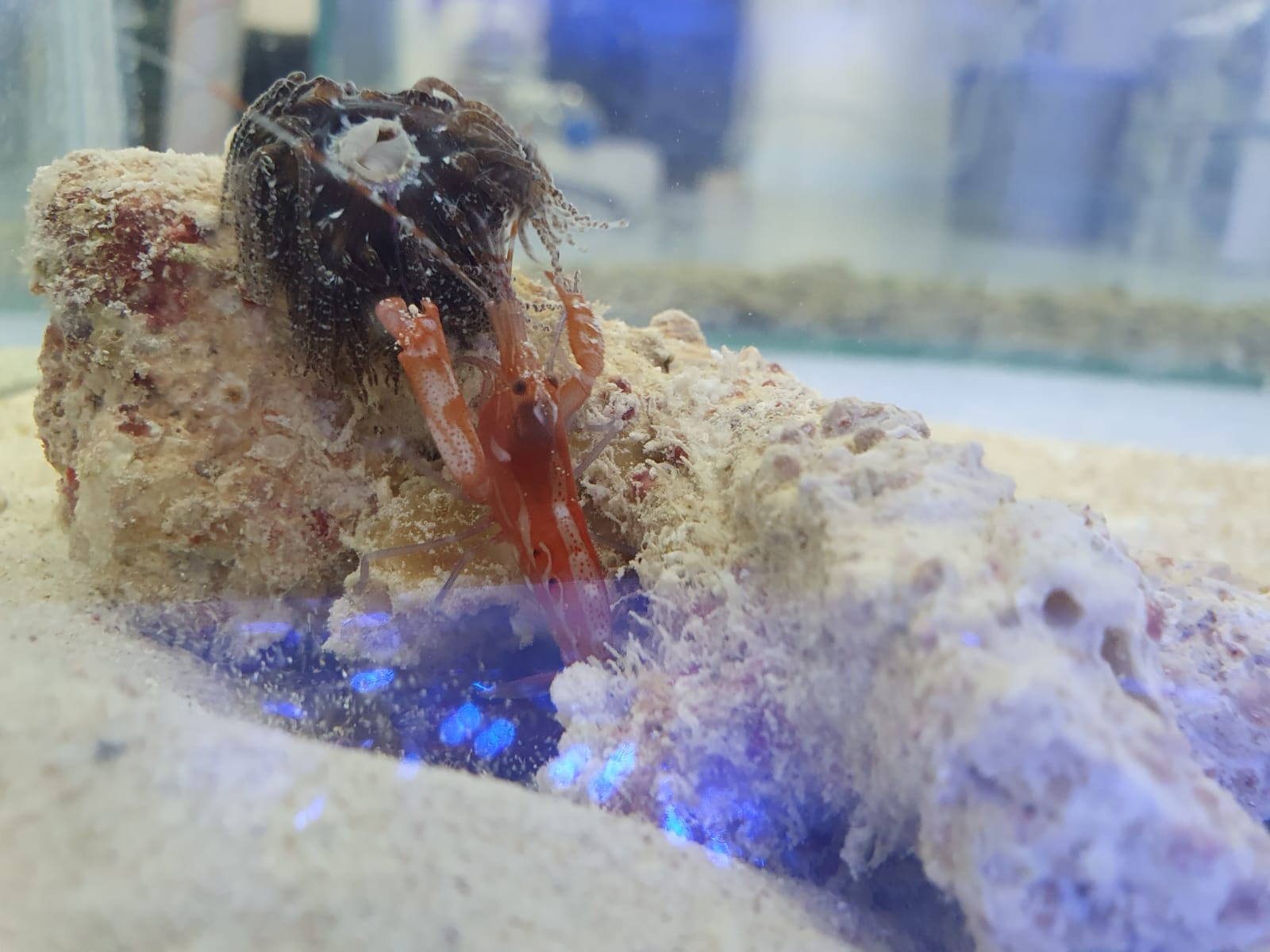
Alpheus armatus, also known as “pistol shrimp,” shoot bullets of energy that can
reach up to 56 miles per hour when snapping their claws closed.
“They will actually pick up the anemone and move it around, and even groom and clean
it. They take care of their house,” Hurt said.
While working with the film crew for the documentary, she spent a week in the waters
around Curaçao with her collaborator from Seattle University, Kristin Hultgren. Though
they won’t appear on screen, they worked behind-the-scenes to help Wildstar Films
with the logistics of finding filming sites for the crew and helped them collect live
specimens to use in an aquarium.
Hurt also collected specimens for her own research, to investigate the genetics of
color vision in this species. She also brought back a sample of the large claw and
is working with the iMaker space on Tech’s campus to get an enlarged 3D image of exactly
what makes the pistol shrimp’s snapping mechanism work. Byron “Andy” Pardue, senior
lecturer of mechanical engineering at Tech, and recent Tech graduate, Katie Torrance,
are also working to produce a 3D animated claw which will be featured in the documentary.
“These shrimp have very complex and interesting life histories and behaviors,” Hurt
said. “It has been fun to contribute to a project that will bring awareness of biodiversity
to a wider audience.”
The documentary, which has not yet been officially named, has an expected release
date of 2024 on Disney+.