

Tech music alumnus receives Fulbright-National Geographic Award to study Icelandic glaciers
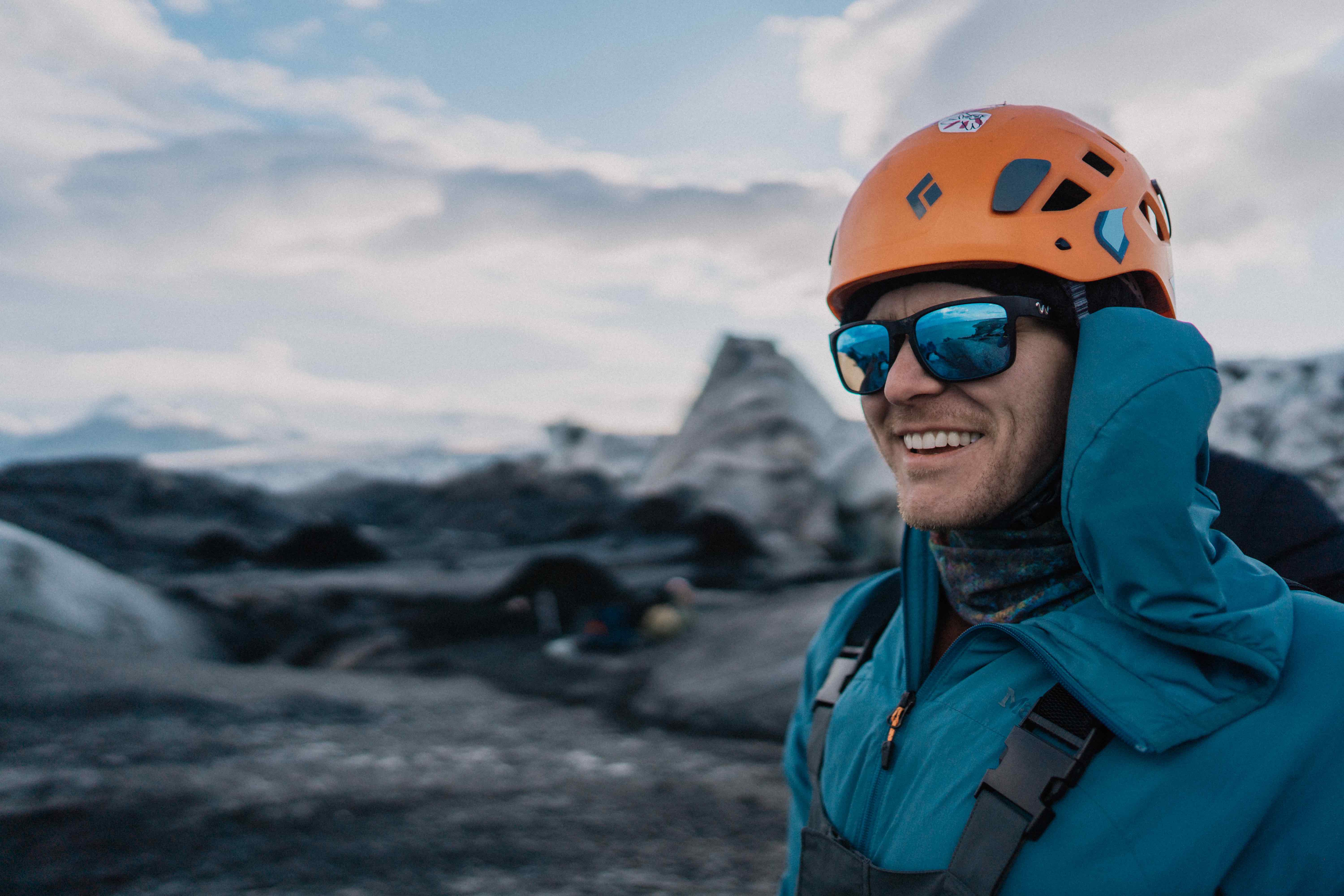
Tennessee Tech alumnus Konstantine Vlasis studies glaciers in Iceland. Photo by Marcus
Neudigate.
From the classrooms of Tennessee Tech University to the glaciers of Iceland, Chattanooga
native Konstantine Vlasis is on a remarkable journey that spans the globe – using
a prestigious Fulbright-National Geographic Award to blend his passions for music
with cultural and natural connections in one of the world’s most stunning settings.
“My work focuses on how we listen to changing landscapes,” he said. “Glaciers are
often experienced as visually stunning landscapes, and they are! But they also make
sound. These masses of ice that move create a unique sonic landscape that is central
to their definition.”
Vlasis is among only five recipients to receive the Fulbright-National Geographic
Award in the 2024-2025 academic year. The grant will enable him to spend two years
immersed in the geography and culture of Iceland, capturing the haunting sounds of
glaciers and translating them into music, and interviewing other artists who are also
interested in glacial sounds.
His project, titled “When Glaciers Sing,” is inspired by his dissertation research
in music and sound studies.
“It aims to trace the human ecology of glaciers in Iceland through natural sounds,
cultural songs and local voices,” Vlasis said.
As he continues his research, Vlasis splits his time between field recording, archival
work, and conducting interviews with not only traditional Icelandic musicians and
but also glaciologists and other environmental scholars.
“My typical day isn’t really typical,” he said.
By engaging with glacial sounds, Vlasis explores how music mediates our relationship
with the environment, creating an immersive audio story that highlights the role of
glaciers as both local landscapes and global symbols of climate change. 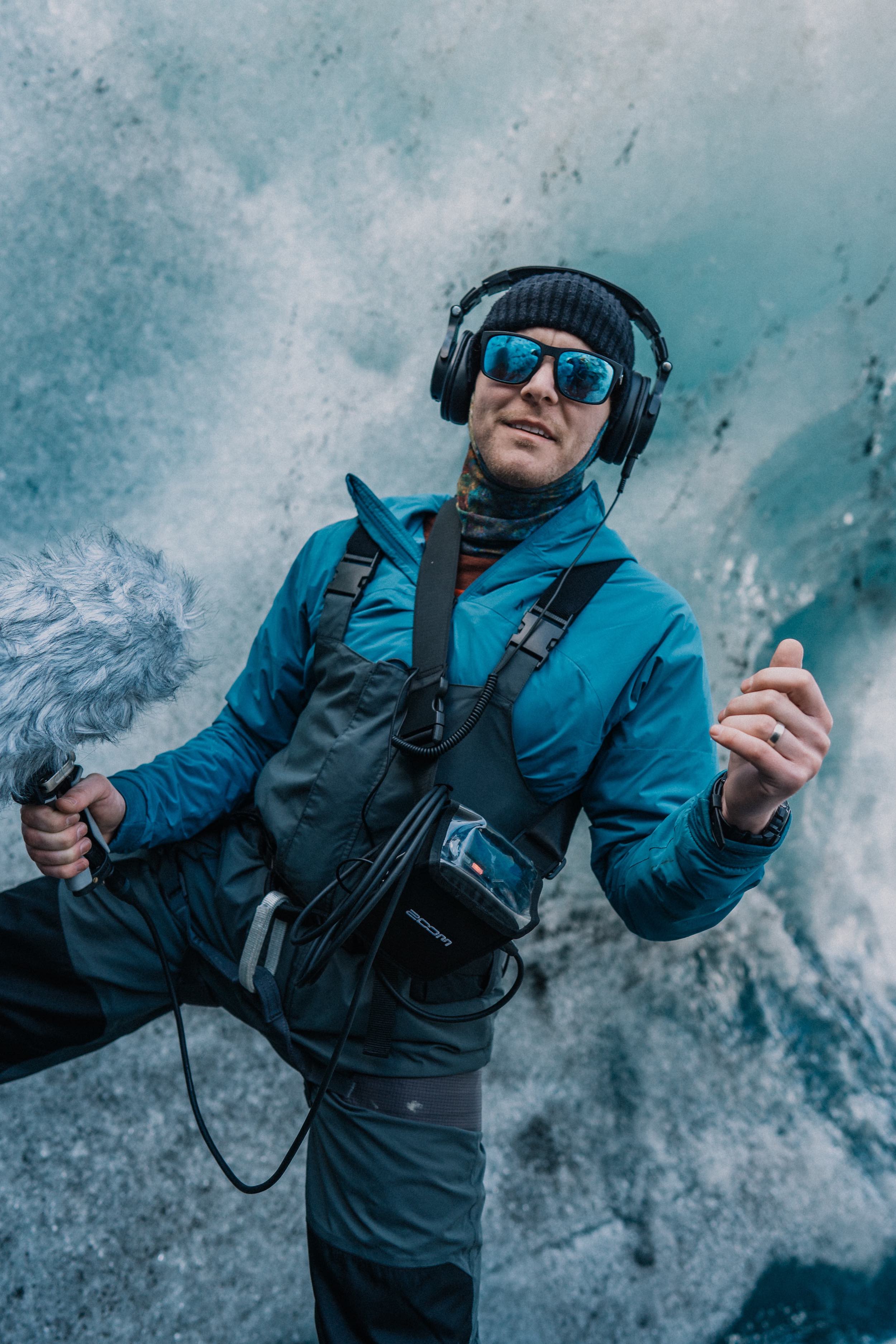
Konstantine Vlasis collecting sound data on Icelandic glaciers. Photo by Marcus Neudigate.
He employs innovative techniques, such as data sonification, to translate the rapid
rate of glacial melting into musical textures, and by using percussion and integrating natural sound recordings, he aims to tell
the geological story of glaciers to convey the urgency of climate change through emotional
musical experiences.
With Iceland’s glaciers projected to disappear in less than 200 years, Vlasis believes
that songs from the past can teach us about the world we hope to foster for future
generations.
“Music impacts us all on an emotional level. It is one way that we create and preserve
meaning. At this pivotal moment in planetary history, we must acknowledge how the
swansongs of glaciers can reshape how we hear the world, our history, and our future
– to offer a path toward action and help us remember what it means to live in a world
with ice,” he said.
This immersive research project about the climate, culture and sounds of Iceland,
however, doesn’t mark his first visit to the country. His interest in Iceland began
in 2015, during a summer research trip while pursuing his master’s degree.
Since then, he’s returned to Iceland multiple times, each visit deepening his appreciation
of the country’s stark contrasts – its dramatic landscapes, limited winter daylight
and vibrant musical and cultural traditions.
“I feel privileged to travel and live somewhere else. It gives me a lot of perspective,
reflecting on my own upbringing and worldview. The traditional music community here
is powerful and beautiful; it emphasizes the stewardship of one’s culture and heritage,”
he said.
Vlasis admits that he can’t imagine being where he is now if not for the faculty
and staff in Tech’s School of Music who fostered his creativity and bold thinking.
“I wouldn’t be where I am today without the mentorship and support of music professor
and program director for the new Live Audio Arts and Sciences degree Eric Harris and
percussion studio professor Eric Willie. They empowered me and made me feel like my
voice mattered. Tech was where I grew up, honed my voice as an artist and developed
my confidence,” Vlasis said.
As for students inspired by his example, Vlasis offers this advice about pursuing
dreams: “It’s a lot of work, and there will be sacrifices. Surround yourself with
love and support and remember to be kind to yourself and others. Enjoy the journey.”
To learn more about his research – including audio and video clips of his project
– visit his website at https://www.konvlasis.com.