

Tech student helps create solution to weekend hunger for Cookeville's unhoused population
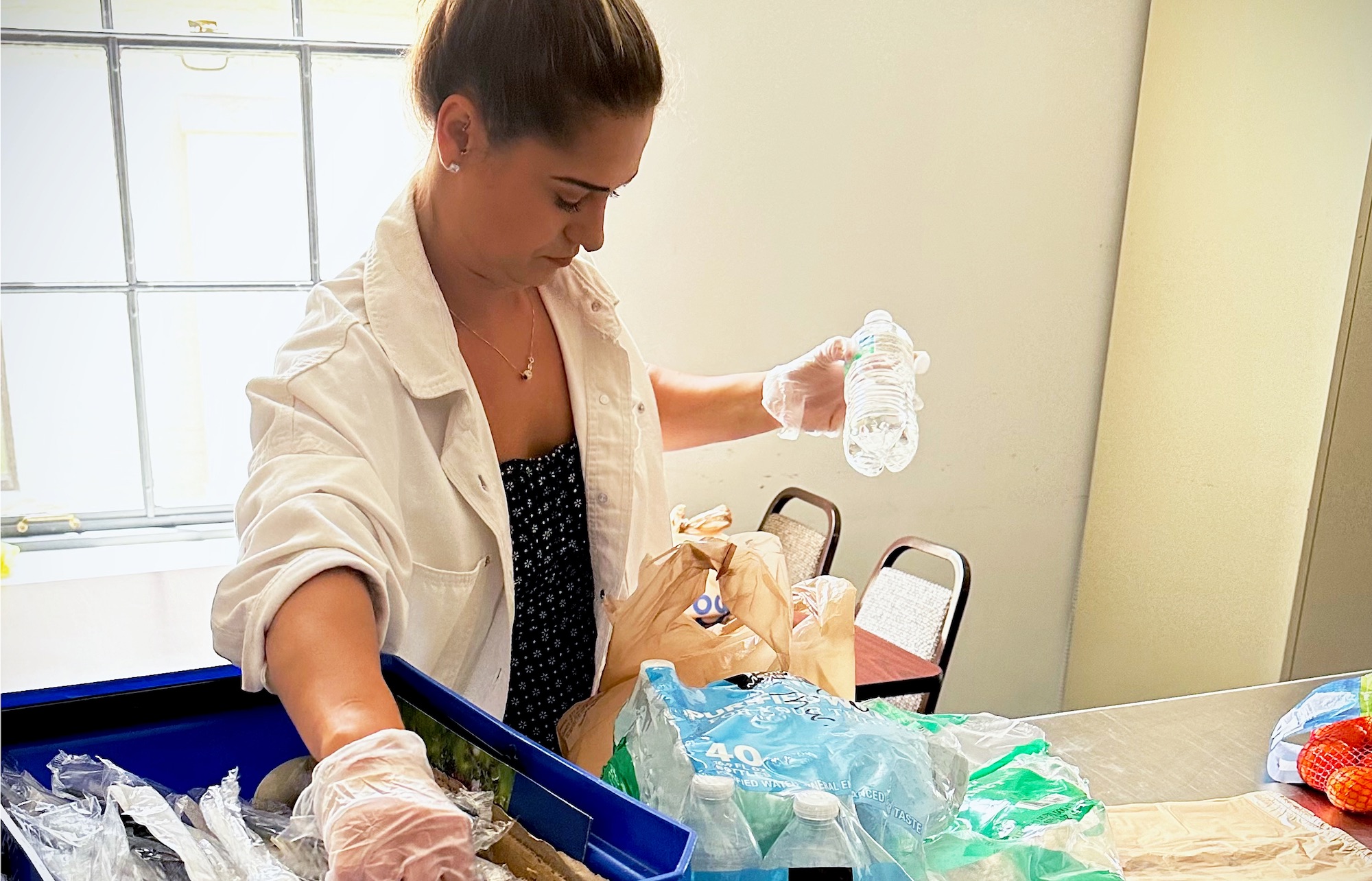
Tech graduate student Krissie Miranda prepares meals for a local food bank.
When Tennessee Tech University graduate student Krissie Miranda volunteered to serve
in the food bank at First United Methodist Church in Cookeville last summer, she learned
something that greatly concerned her. Though community members experiencing homelessness
were provided with plenty of food during the week, on the weekends many of the facilities
they relied on were either closed or had limited hours.
“One particular story that deeply resonated with me was from a young homeless woman
struggling to properly manage her diabetes due to inconsistent access to food,” Miranda
said. “She expressed the immense difficulty of maintaining proper diabetic care while
living on the streets, emphasizing the critical importance of consistent access to
nutritious food for her health.”
Miranda decided she could be part of the solution. Partnering with the church, she
has kicked off what she calls the Weekend Nourishment Project: a plan to help ensure
that those experiencing homelessness in Cookeville have consistent access to nutritious
meals on Saturdays and Sundays.
Working together with Tamika Parker, director of servant ministries at First United
Methodist, they came up with the idea of a refrigerated vending machine that would
be set up on the church’s property and would hold items like canned goods, protein
bars, sandwiches and healthy snacks. The food would come from the church’s food pantry,
which is supplied by Second Harvest of Middle Tennessee, a food bank that gets its
donations from grocery stores, farms, manufacturers, distributors and individuals.
“Additionally, we are exploring a partnership with Tennessee Tech University, aiming
to involve the next graduate class in the nutrition program to actively participate
in preparing meals for the vending machine as part of their community service hours,”
Miranda said.
The machine would use a token or pre-paid card system to allow 24/7 access. The tokens
or cards would be handed out during office hours at the church on Fridays.
Miranda and Parker have already started working on their plan, having located an appropriate
used vending machine and the church having approved funding for the machine’s purchase.
However, there are still many steps to complete before their idea becomes reality.
For example, the Health Department must approve the vending machine before it is purchased
and installed, and electrical work must be done on the vending machine to program
it to accept the tokens/cards.
“While challenges may arise, we're fully committed to a thorough implementation process
to ensure this initiative’s success,” Miranda said. “If realized, this could potentially
be the first program of its kind in Tennessee directly providing weekend meals for
the homeless through an automated vending system.”
In her research, Miranda found that Tennessee ranks 35th among all U.S. states for
food insecurity, with over 11.5% of households in Putnam County struggling to access
adequate nutrition. Simultaneously, the state's unhoused population has spiked by
45.6% over the past two years to 10,567 individuals as of 2022 - the 5th highest increase
nationwide.
“This groundbreaking initiative could potentially become a blueprint for tackling
similar challenges across the region,” Miranda said. “We’re dedicated to further developing
partnerships to bring this vision to reality and create lasting change.”