

Tennessee Tech students learn sustainability on study abroad trip to Scotland
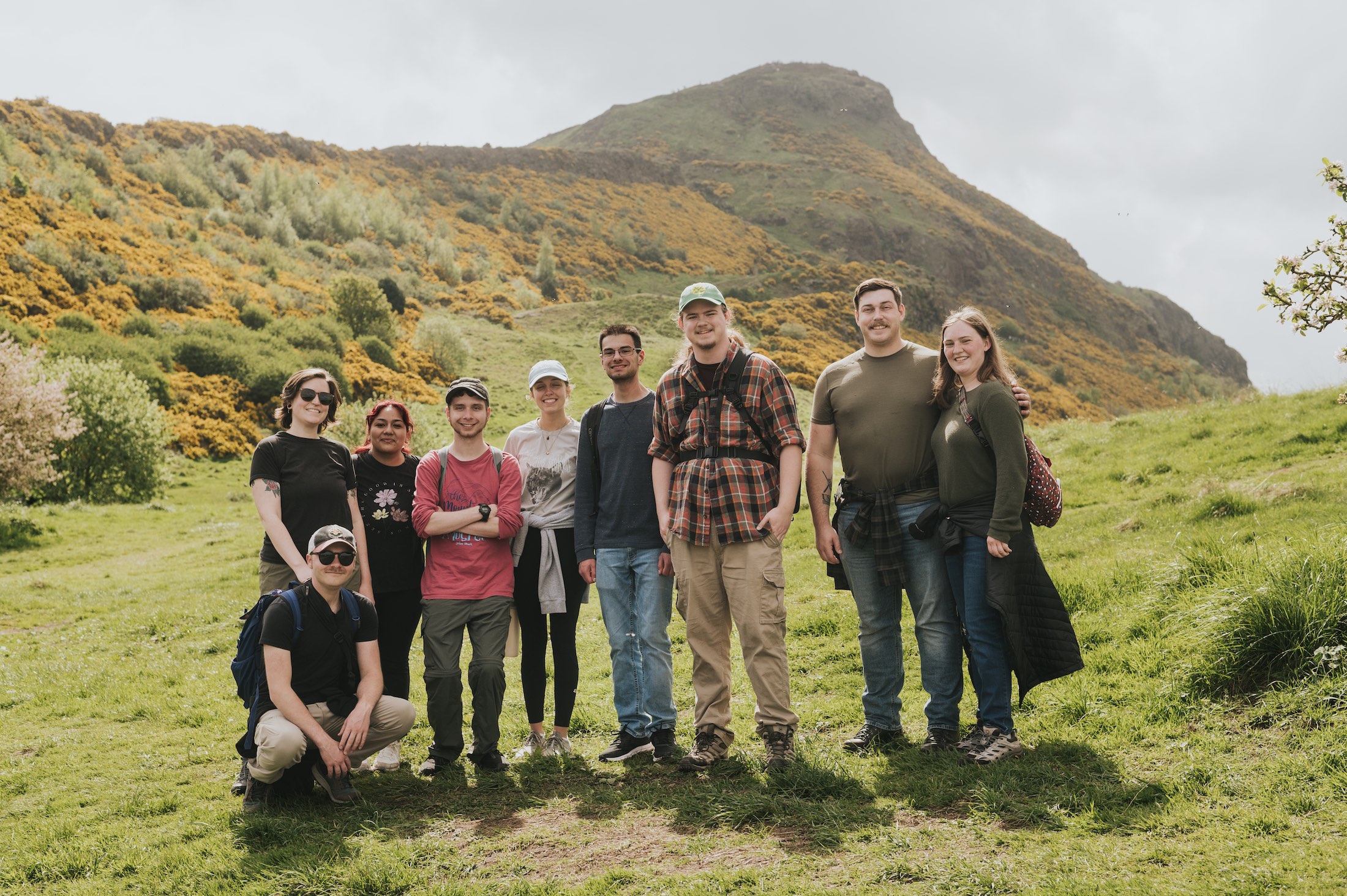
Pictured, from left, are Alexia Shore, Quaid Anderson (kneeling), Deysy Roman, Josh
Loiacono, Savannah Johnson, Tony Lamantia, Henry Cropp, Ben Iles and Maddie Blessing
during their trip to Scotland.
A group of 11 students from Tennessee Tech University’s School of Environmental Studies
and the Department of Earth Sciences made a trip to Scotland this summer, where they
not only got the opportunity to see famous landmarks but also were able to contribute
to sustainability efforts on a Scottish island.
"Scotland is known for its beautiful landscapes, its priority of sustainability initiatives
and it's known as the birthplace of geology," said Samantha Allen, lecturer in Tech’s
School of Environmental Studies, who helped plan the trip.
In addition to Allen, the May 2024 trip was also led by David Hajdik, professor in
the School of Environmental Studies, and Philip Roberson, lab coordinator in the Department
of Earth Sciences. The group visited areas such as Edinburgh, Glasgow, Inverness,
Loch Ness and the Isle of Skye, just to name a few. They also toured the University
of St Andrews' School of Earth and Environmental Sciences, gaining an international
perspective on their field of study.
They additionally visited the Isle of Raasay, one of six islands chosen by the Scottish
government to go carbon neutral by 2040. Tech faculty made connections last year with
Chrissie Gillies and Tom Lusink of the Isle of Raasay Carbon Neutral Islands Project
during an exploratory trip and were eager to introduce the students to them as well.
“They had a lot of needs they were trying to meet that aligned with my research interests
and areas of expertise,” Allen said. “They were lacking in island-wide mapping of
the terrain, hydrology, land use or forests - all of which could help their planning
and management efforts. Additionally, the island has a widespread population of a
non-native and invasive species of rhododendron.”
During the trip with the students, the group met with partners of the Isle of Raasay
Carbon Neutral Islands Project to explore the island, learn more about the project
and participate in service projects, including feeding lambs, planning erosion monitoring
efforts and "Rhoddy bludging" – or manually removing the invasive rhododendron plants.
In an effort to further support the project, Allen and her Professional Studies Master's
student Josh Loiacono are using remote sensing and geographic information systems
(GIS) to map the island and track the spread of the invasive rhododendron.
"We hope to return in 2025 to expand the data collection in order to best tell the
story of the Isle of Raasay and to identify which environmental factors are influencing
the spread of rhododendron," Allen said.
Upon returning from the trip, the students expressed their enthusiasm about the chance
to immerse themselves in a new culture, and the trip’s role as an excellent introduction
to studying abroad. Emphasizing the unique opportunity to step outside their comfort
zones and embrace real-world learning, they praised the incredible views and rich
historical context, particularly for those in science fields.
"It may have only been a 12-day trip, but we all gained memories and experiences that
will last a lifetime!" Allen said.