

Tech's Water Center joins statewide effort to protect the Duck River
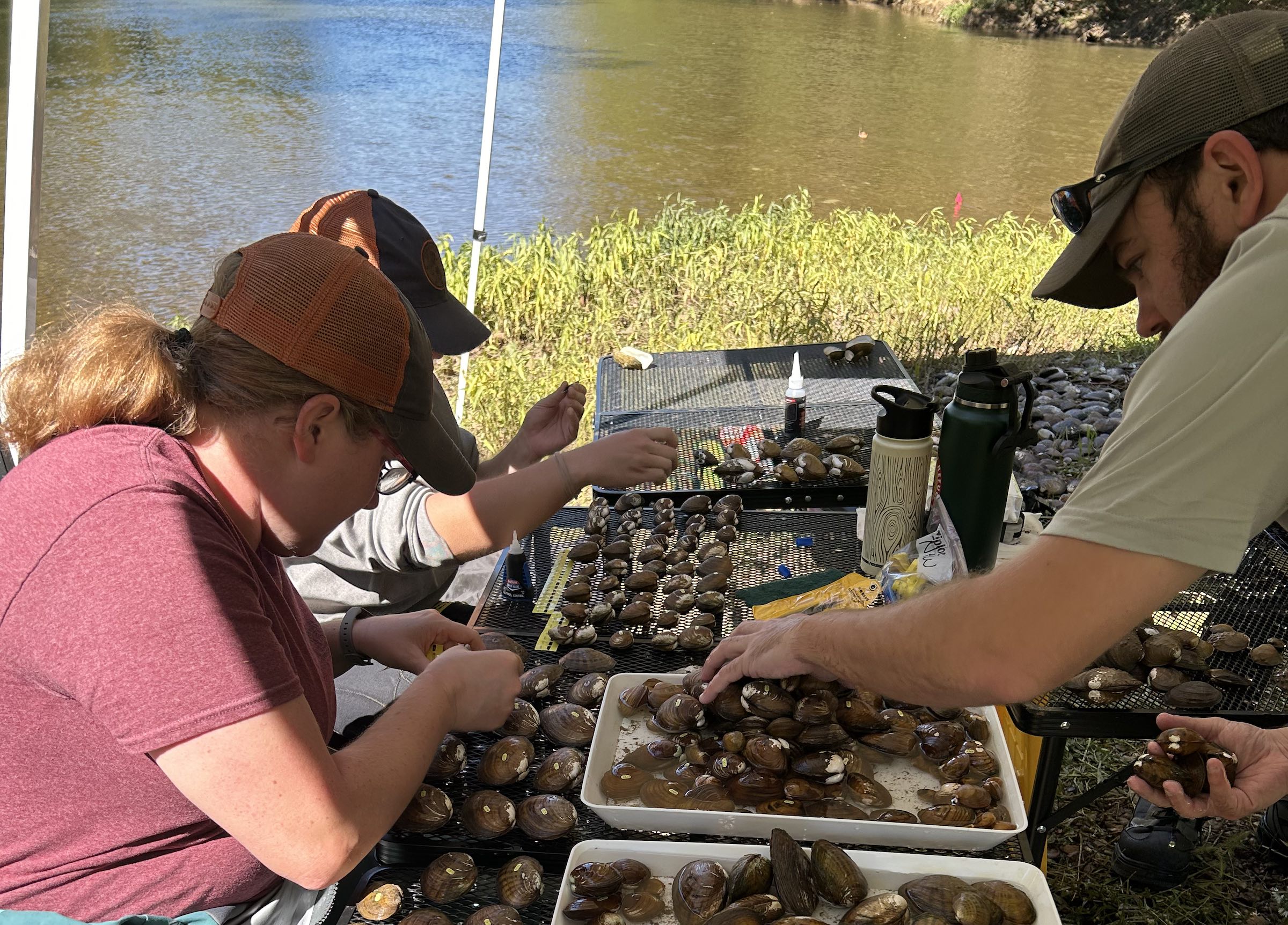
Employees and volunteers with Tennessee Wildlife Resources Agency study some of the
mussels found in the Duck River.
Tennessee Tech University’s Center for the Management, Utilization and Protection
of Water Resources – also called the Water Center – is playing an important role in
the state’s efforts to protect one of its most important natural resources: the Duck
River.
That role became official earlier this year when Governor Bill Lee's executive order
established the Duck River Watershed Planning Partnership with 19 appointees from
state agencies, utilities, local governments and conservation organizations. Tech
stands as the sole university on the board, with Water Center Director Justin Murdock
serving as its only academic member.
“This group is comprised of a diverse makeup of stakeholders and is tasked to develop
a watershed planning framework for the Duck River to conserve the unique biodiversity
and quality of river in the face of population growth and increased water demands,”
Murdock said. “A lot of the people on this planning partnership group grew up on this
river, so they very well understand what the river means to the community and the
state.”
With more people moving to central Tennessee, increasing amounts of water are being
pulled from the Duck River to supply the growing community, leading to lower water
levels. Pollution is also increasing, including sediment, pesticides, chemicals and
runoff from landfills.
“So, it's not only a water quantity issue, but it's also a water quality issue,” Murdock
explained. “Right now, we don't know all of the information needed to be able to understand
how best to mitigate the negative effects on the river, but our goal is identifying
the best available data to develop an actionable plan now.”
Tech Water Center Director Justin Murdock.
The Duck River Watershed Planning Partnership has been tasked with preparing a report
to outline findings and recommendations for the river’s future. The Duck River provides
drinking water to more than 250,000 people and supports agriculture, industry, recreation
and fragile ecosystems across seven counties. It is home to many threatened or endangered
species, some of which cannot be found anywhere else on the planet.
One of these endangered groups includes freshwater mussels — a specialty of Amanda
Rosenberger, professor of biology at Tech and assistant unit leader of the Tennessee
Cooperative Fishery Research Unit.
“Freshwater mussels are called the ‘liver of the river’,” she said. “They’re filter
feeders. And as filter feeders, they do a lot. They can transform nutrients that are
in the water column into bioavailable food. They aerate the bottom of the stream by
burrowing... they basically take gunk, and they turn it into more edible gunk.”
This leads to a cleaner and healthier river, both for the species who call it home
and for the humans who use it for drinking, fishing and recreation.
“These animals are basically signaling to us that this system is delicate, it's valuable
and it's important,” Rosenberger said. “If we harness the ecosystem services these
animals provide to create a water-wise and water-secure community south of Nashville,
we can basically use these animals as a vehicle to reduce human suffering and increase
the ecosystem services that these animals provide.”
As Murdock works with the board over the next year, he has plenty of other experts
from the Water Center and across Tech’s campus to help collect information.
“The Water Center is comprised of geologists, engineers, water quality experts, biologists,
environmental scientists, geneticists – we have all kinds of people who, as Dr. Murdock
and the committee are discovering what needs to happen to this river, can help address
the challenges that may arise, if we’re called upon to do so,” said Grace Tinker,
lab analytical and research manager at the Water Center.
The Duck River has long been part of university research efforts. Rosenberger has
worked with Tech students on a number of projects related to mussel biodiversity.
Tech alumna Brittany Bajo completed her master’s thesis on habitat requirements of
the Duck River’s freshwater mussel concentrations. Her findings have led to important
hypotheses on how the river’s underlying geology is important for its mussel populations.
Bajo is now a state malacologist (mussel biologist) with the Tennessee Wildlife Resources
Agency.
Likewise, Tech research specialist Kristen Womble developed a database containing
more than 7,000 mussel records — a tool now being used to guide conservation planning. 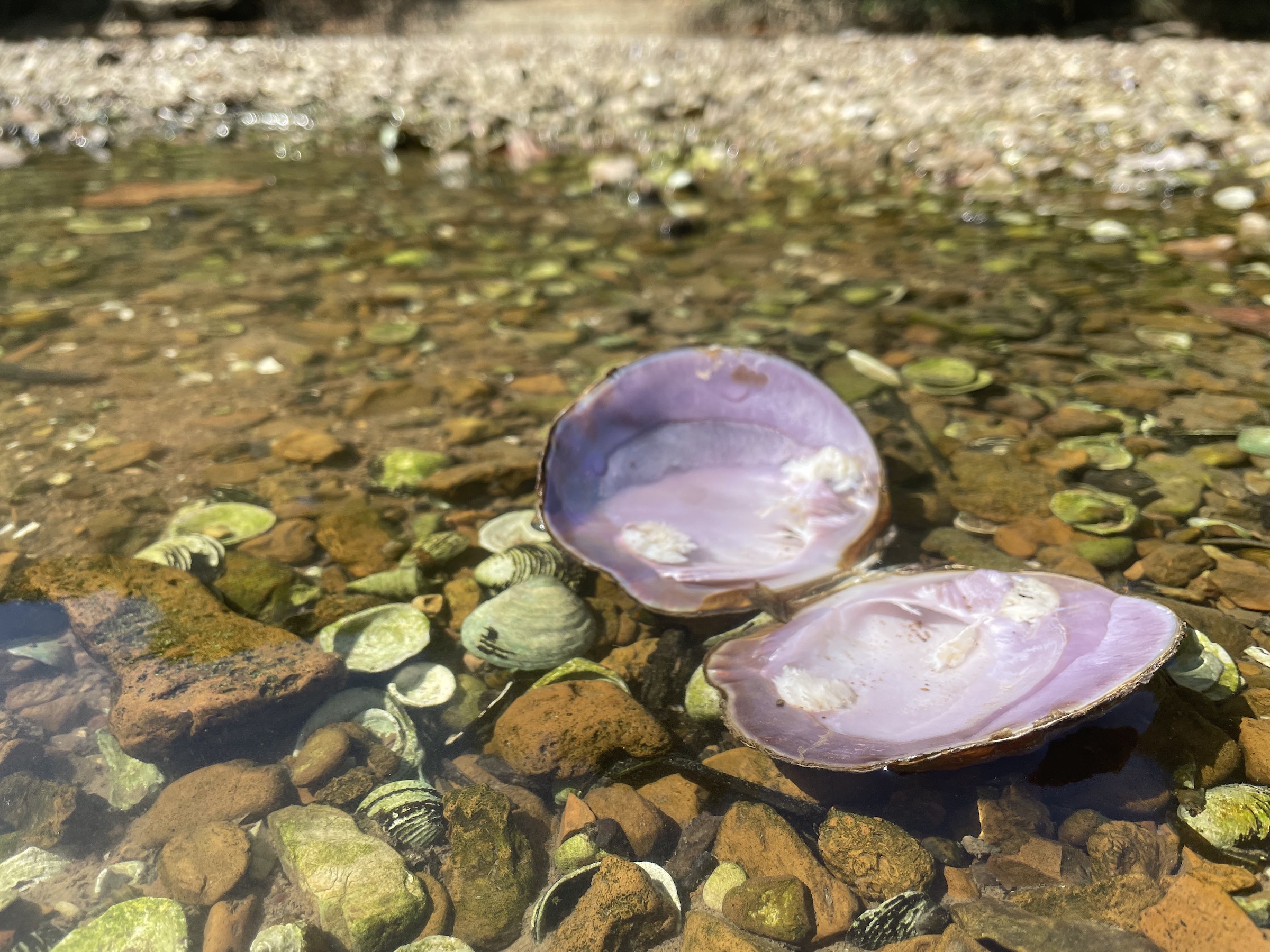
One of the mussels found in the Duck River's fragile ecosystem.
“The research on these mussels is so important because they are acting as underwater
canaries, showing us when and where river conditions are deteriorating” Murdock explained.
“We know that if they are starting to go away, then something is wrong. So, when we're
protecting these, we're protecting everything else in the river too.”
The planning partnership will meet quarterly through the end of 2026 and produce a
final report with recommendations to the governor. A secondary objective is to develop
a plan that is transferable to other watersheds in the state.
“I'm really grateful for this community of people who have their eye on this. Otherwise,
it's just another tragic story ready to be written for both the animals and the humans,”
Rosenberger said.
For more information about Tennessee Tech’s Water Center, visit https://www.tntech.edu/watercenter.