
Tech’s Learning Resource Center gets an upgrade for the digital age
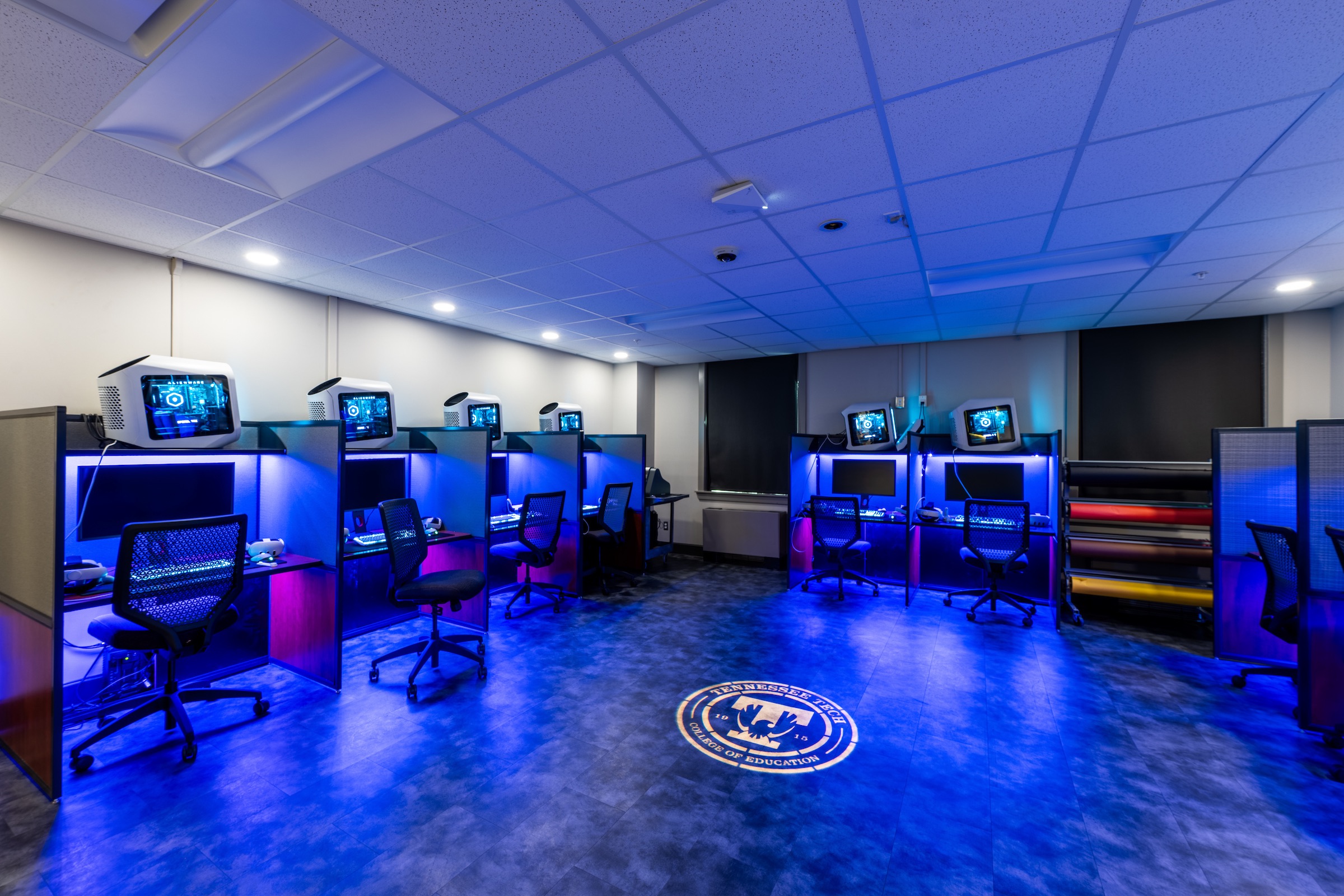
The JLRC's VISION Lab, where students can be immersed in virtual classroom settings
captured using 360-degree cameras in local schools.
The Jeffers Learning Resource Center (JLRC) on the campus of Tennessee Tech University
has provided support and materials for students in the university’s College of Education
& Human Sciences for more than half a century.
Now, the center is preparing future educators to innovate and teach in the digital
age thanks to a sleek, 21st-century makeover complete with an enlarged makerspace,
virtual reality lab, robotics tools, new furnishings and other improvements.
“We’re known for the technology we offer,” said Genny Patterson, JLRC coordinator,
who explained that the center has long offered free laptops, iPads and other devices
for education majors to use. “Now, with these upgrades, we’re identifying new ways
to integrate technology into the classroom, while also giving students the tools to
actually design and create materials for their specific classes.”
Among the improvements is a new Creation Studio installed last summer with 3D printers,
a laser engraver, sewing machine, vinyl cutter, button maker and more. Patterson explained
that education students can use the space to create everything from school swag to
model organs and animals, dissection kits and even board games.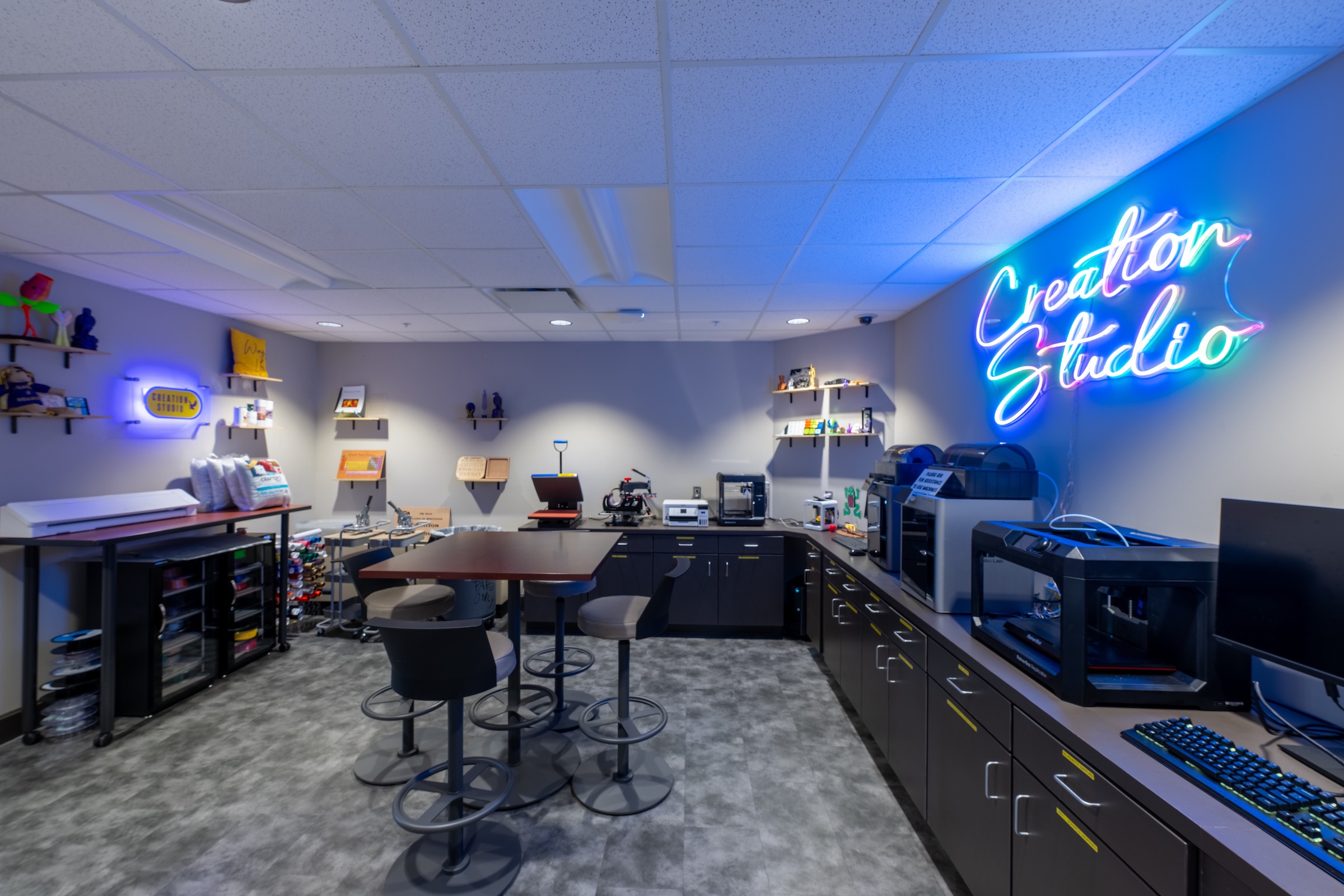
The JLRC's Creation Studio offers 3D printers, a laser engraver, a sewing machine,
vinyl cutter and more.
With teachers often spending out-of-pocket on resources for their classrooms, Patterson
adds that the JLRC aims to help meet practical needs for current and future educators.
The center even has plans to expand their offerings to Tech alumni.
“Teachers get a limited amount of funds to spend on their classroom, so being able
to provide them with the skills to make many of these items in-house is significant,”
said Patterson.
The JLRC is additionally outfitted with a virtual reality space known as the VISION
Lab. There, students can be immersed in virtual classroom settings captured using
360-degree cameras in local schools.
“This gives students a ‘first foot’ in the classroom so they can do observations,
see teacher interactions and typical behaviors of students,” said Patterson. “We have
kindergarten through 12th grade classroom settings in all different subject areas.
It’s not meant to replace in-person observations, but it gives our students a great
first start.”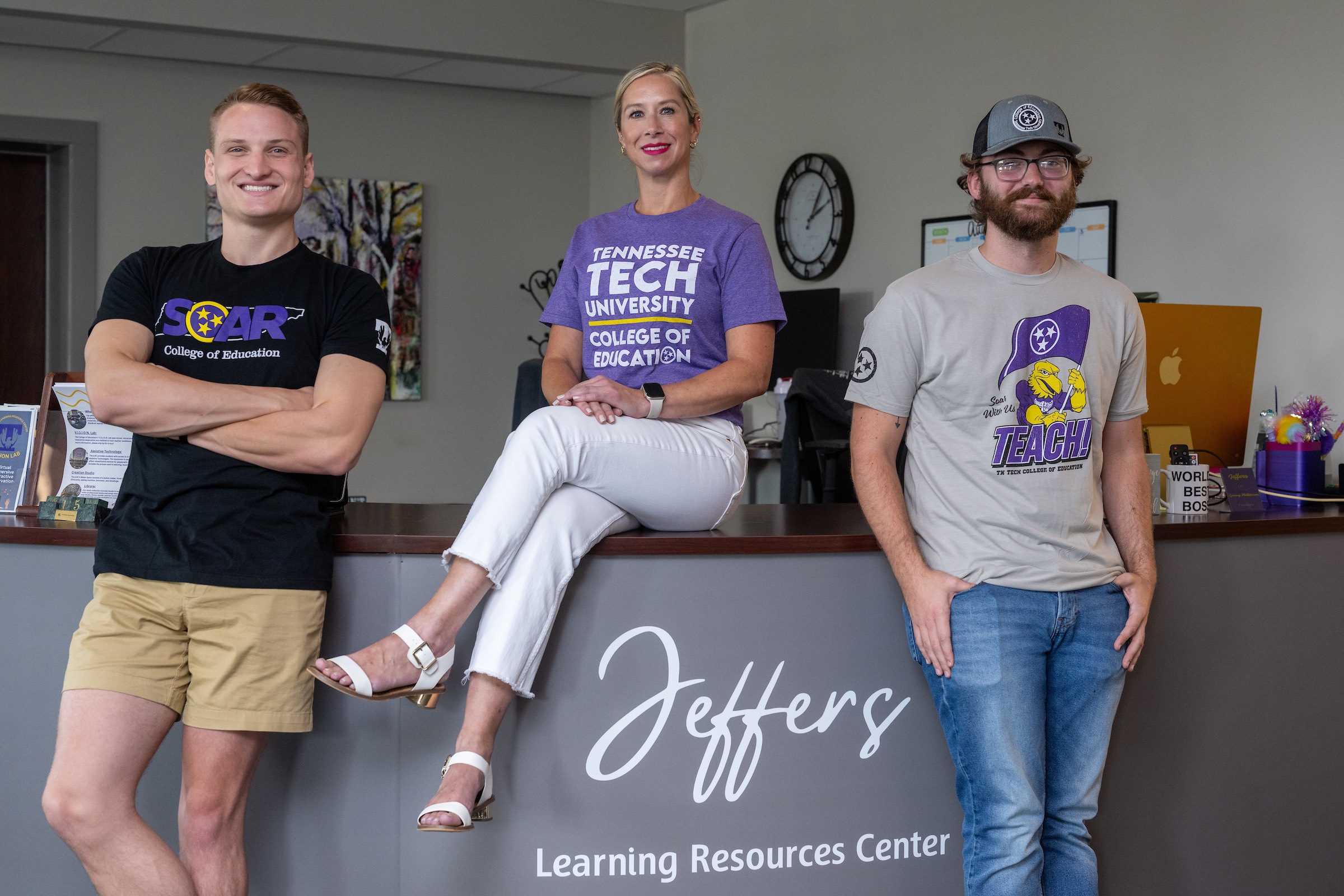
From left: Tyree Cripps, graduate teaching associate, Genny Patterson, JLRC coordinator,
and Cullen McAlpin, graduate assistant.
Renovations to the JLRC also include the Innovation Station, which offers a wide variety
of robotic and programming opportunities – even allowing users to manipulate the robots
from afar using virtual reality.
“If teachers in the area would like to use these tools, they'll be able to just log
on from wherever they are. They could play in the virtual world, but they would be
moving the robots here at Tennessee Tech,” said Cory Gleasman, assistant professor
of education technology and computer science education. “It’s giving students and
teachers a new way of thinking about instructional design and innovative teaching
and learning with technology.”
Gleasman adds that, while the JLRC’s use of cutting-edge technologies is exciting,
it’s all in service to real-world needs – not simply technology for technology’s sake.
“Everything we do is derived from a need,” said Gleasman. “Yes, we love the cool technology,
but it all points back to some type of need in the education field.”
Another way Gleasman and his colleagues at Tech are addressing those needs is through
Tech’s new fully online Master of Arts in Learning, Design and Technology. Gleasman says the program aligns closely with the new technologies in use at the
JLRC.
The course of study includes classes on digital literacy and computing, programming
fundamentals and computational thinking, computer science concepts for teachers, and
computer science instructional methods, among others. According to Gleasman, the degree
will help educators create better online learning experiences and leverage new technologies
to drive better student outcomes.
With the College of Education & Human Sciences now serving as the second largest college
on Tech’s campus, Lizzie Burrows, marketing and recruitment specialist for the college,
says the combination of the new master’s program and the improvements to the JLRC
are sparking even greater interest from prospective students.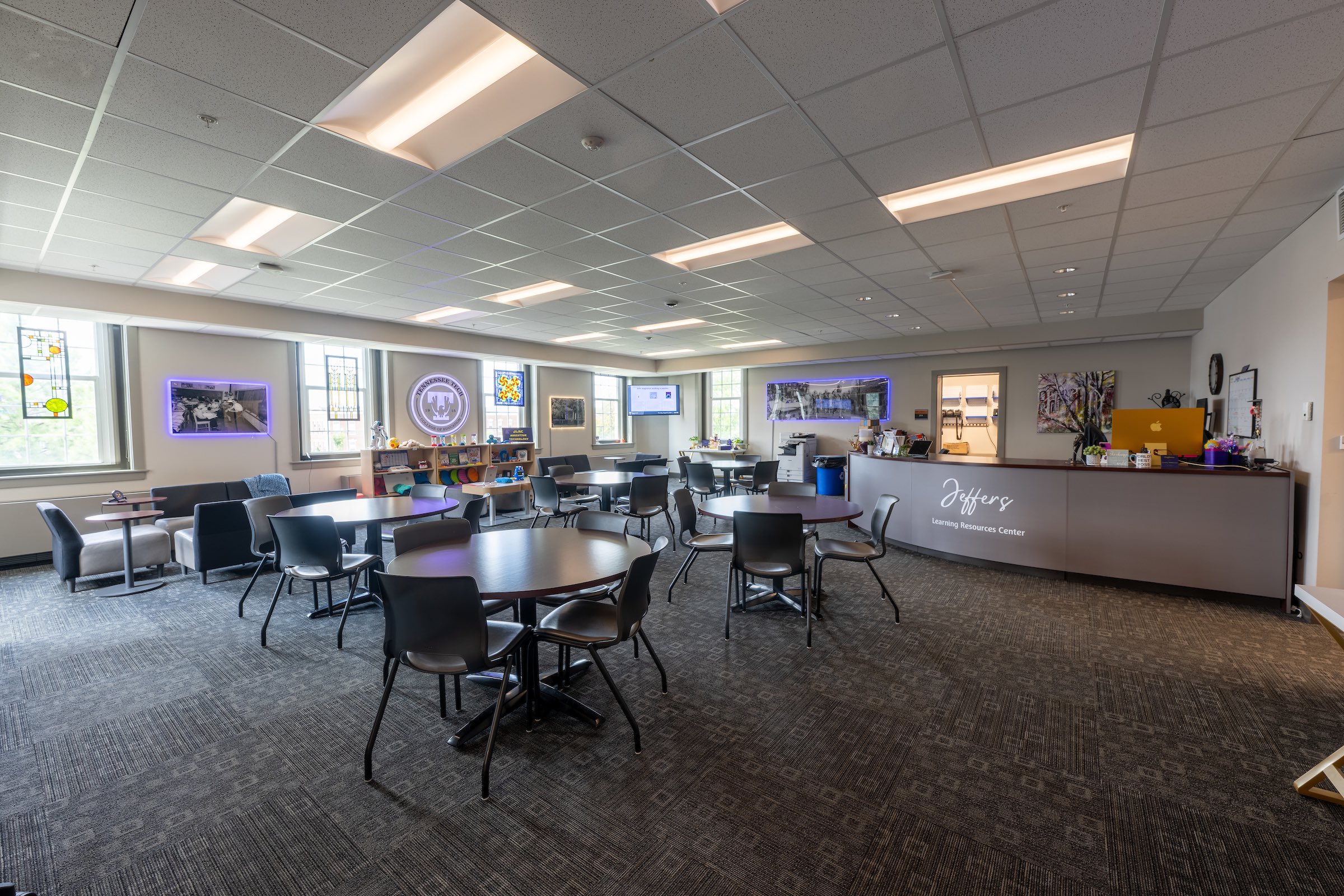
When students first enter the JLRC, they are greeted by the JLRC Commons Room, pictured
above.
“I have leaned into the JLRC in recruitment,” said Burrows. “It’s unique, it’s a community
and it’s our biggest selling point when we bring prospective students on campus. The
teachers love it, the parents love it and the students love it. They feel we’re investing
in the next generation of educators – and we are. We’re lucky to have all of this
at our students’ fingertips.”
Learn more about the Jeffers Learning Resource Center in Tennessee Tech’s College
of Education & Human Sciences at https://www.tntech.edu/education/lrc/.