
Blind since age 14, Tennessee Tech's Hannah Willis earns fourth degree: 'It proves I can do it, and others can too'
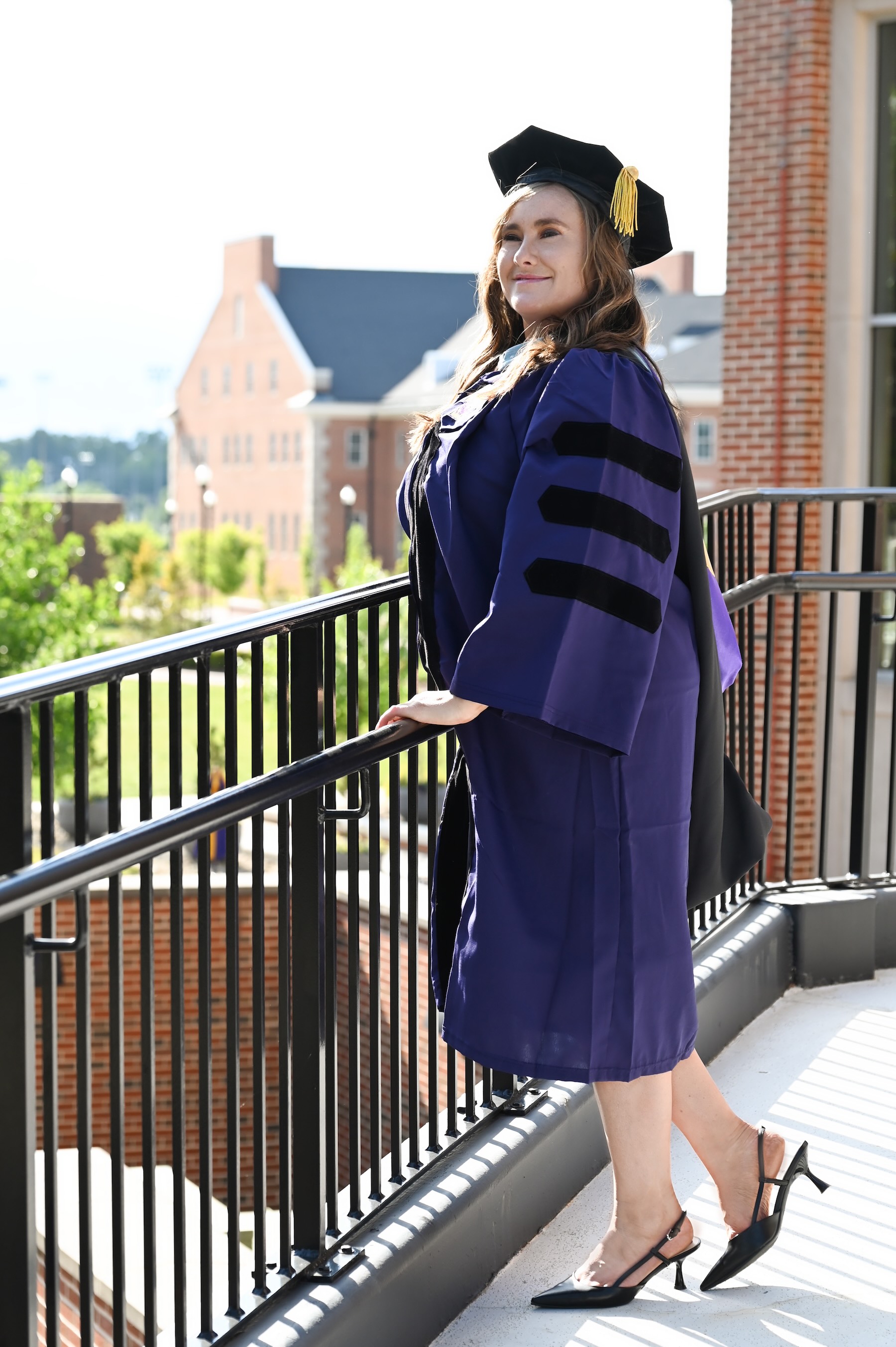
When Hannah Willis lost her vision after a brain tumor in eighth grade, her goals didn't disappear.
"They just looked a little different," she said.
Now, after 14 years at Tennessee Tech University, the first-generation college graduate and single mother has earned her fourth degree from the university — a Ph.D. in exceptional learning with a concentration in critical discourse and literacy studies — while leaving a lasting mark on the campus she has long called home.
For Willis, every degree was driven by opportunity.
"I went to get a bachelor's because that was a need," she explained. "Then new opportunities opened up, and with each door opening, it kind of shifted my goals."
Willis arrived at Tech in 2012 to study communications before discovering a passion for helping students succeed. Her academic path eventually led her to psychology, an educational specialist degree and, ultimately, doctoral studies focused on higher education.
Along the way, she balanced graduate school with raising her 11-year-old daughter, Evie, as a single mother, relying on a strong support system of family, friends and colleagues.
"It was challenging, but it's not insurmountable," Willis said. "I have such an amazing village."
Today, Willis serves as coordinator for iCube, a grant-funded innovation center within Tech's College of Business that develops creative solutions to public health and safety challenges. Her work includes projects that connect Tennesseans with mental health and substance use treatment resources while supporting research that helps improve communities across the state.
Willis' impact at Tech extends beyond the classroom and workplace.
In 2020, she became the university's first female student trustee, representing students on Tech’s governing board while advocating for accessibility across campus. While Willis is proud of the ways she used her platform, she believes her most important contribution was simply showing up.
“I think being a representative of something ‘other’ – a nontraditional student, a student with a disability, and all those different ‘others’ – and just being there as my full self made an impact,” she explained. “It’s representation and showing people how accommodations are made and how you can do big things.”
Rather than dwelling on obstacles, Willis says she has always focused on finding new ways to achieve her goals.
"Even during that first year after going blind, I was still me. I’m the same person,” she said. “I knew I had to do things differently, but it didn’t mean I couldn’t do those things."
That perspective shaped her experience at Tech, where she says faculty and staff fostered a welcoming environment that continually adapted to meet students' needs.
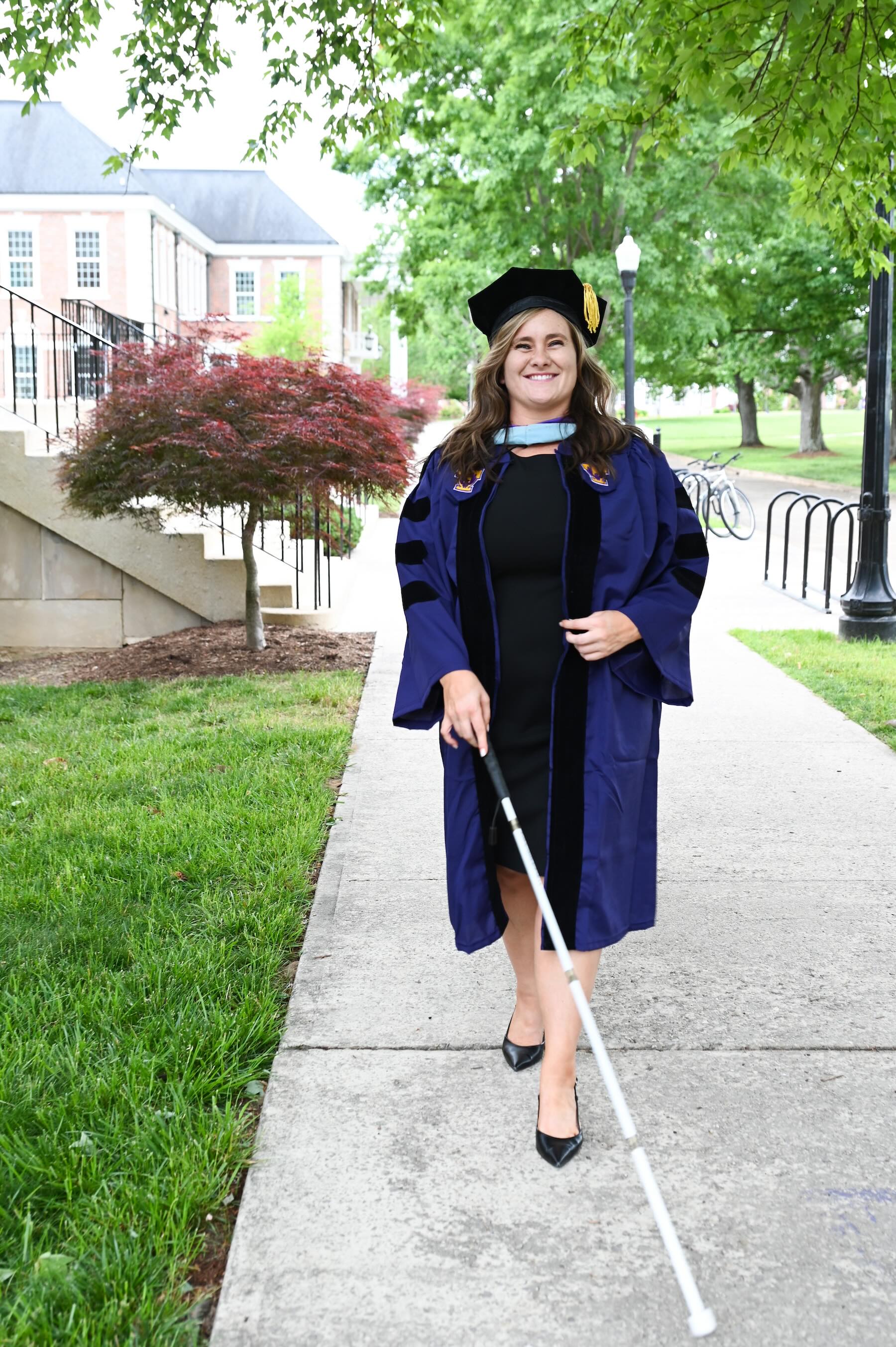
While Willis continued working with Tech's Accessible Education Center to receive accessible textbooks, she said her academic program stood out because many accessibility practices were built into courses from the outset.
“I think our willingness to grow is a big highlight,” Willis said of accessibility at Tech. “In my particular program, the material was so accessible, and the professors were so proactive, that after the first semester I rarely needed to request formal accommodations for my coursework. They worked to make sure everyone in the class could access the education equally.”
As she reflects on earning her doctorate, Willis admits hearing the words "Dr. Willis" still feels surreal.
"Every time someone says, 'Dr. Willis,' I'm a little confused," she said with a laugh. "Then I get that flood of excitement. It’s validation. It proves I can do it, and others can too.”
Among the proudest moments came not at graduation, but during a FaceTime call with her 11-year-old daughter after she successfully defended her dissertation.
"My girl was telling all her friends, 'My mommy's a doctor,'" Willis recalled. "I got off the phone and just cried. I thought ‘my baby's proud.’ It was the highlight."
Looking back on her journey with Tech, Willis says the university gave her much more than four degrees.
"Tech has given me faculty who became mentors, colleagues who became friends and the space to grow and be accepted," she said. "I don't think I could put a price on that experience."