

Tech engineering graduate makes global journey to drive AI research in autonomous vehicles
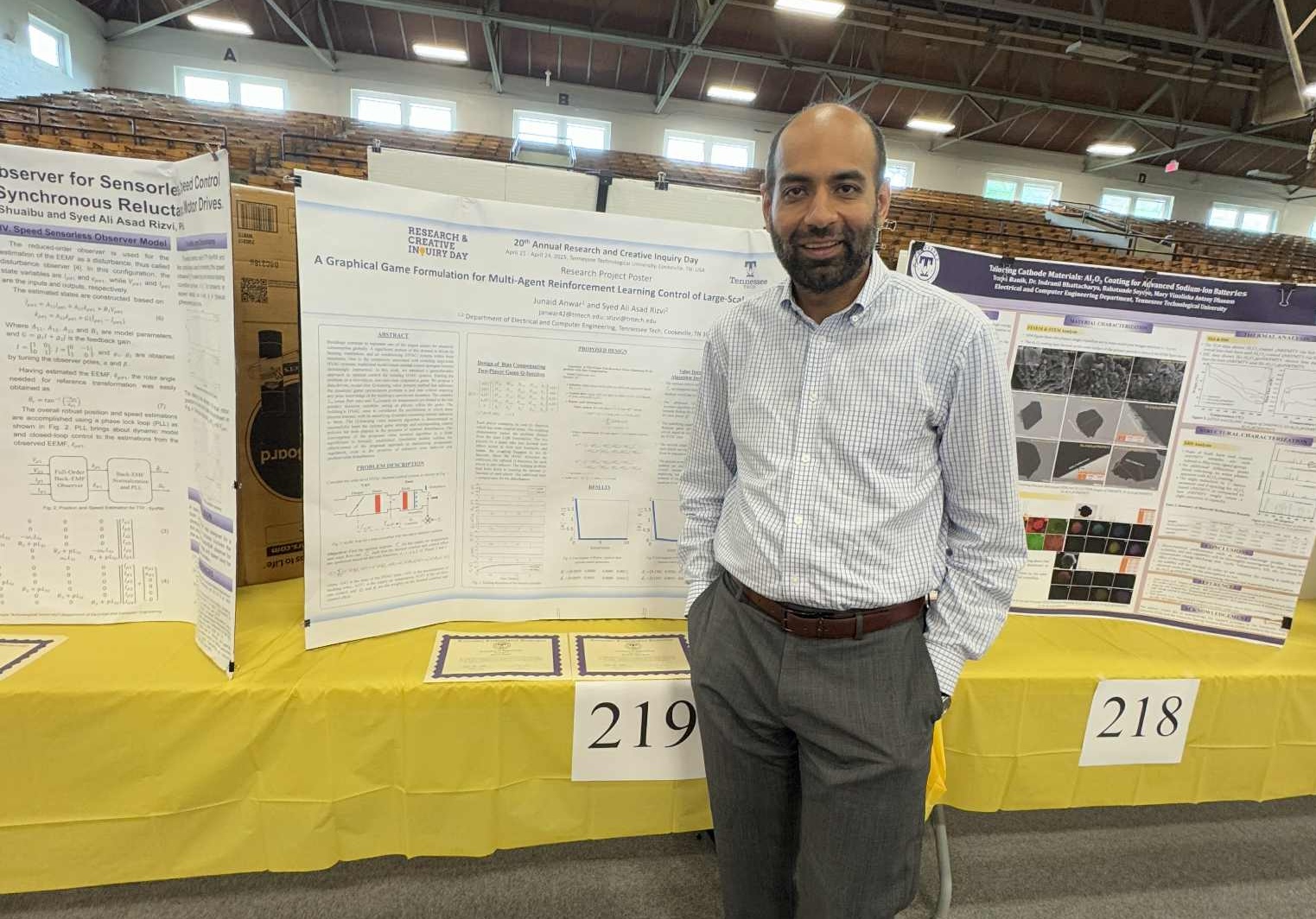
A recent Tennessee Tech doctoral graduate exemplifies the global reach of the university’s engineering programs and the practical impact of its research.
Junaid Anwar, originally from Pakistan, earned his doctorate in electrical engineering last semester, focusing on artificial intelligence-based control systems for autonomous vehicles. He is now continuing that work as a faculty member at San Jose State University in California.
“My research is about enhancing how autonomous systems interact with the real world. Even though the technology is complex, at the end of the day, it should have a positive impact on people,” Anwar said.
His research at Tech combined AI algorithms with practical experimentation in the university’s Quanser QCar arena, a controlled environment designed to simulate real driving scenarios.
The purpose of that research, which he is continuing in his new post, is to make autonomous – or driverless – vehicles more responsive to real-world road and traffic conditions.
Tech’s Quanser QCar platform allowed him to test multi-vehicle coordination, responsiveness to traffic changes and safety protocols, bridging the gap between theoretical models and tangible vehicle behavior – but he envisions applications far beyond miniature test cars.
“In 20 or 25 years, trucks could travel in coordinated convoys with one human driver and multiple autonomous vehicles following behind, adapting to changes on the road. That’s a bigger picture goal, but the foundational work begins here, in controlled research environments,” he said.
Beyond technical innovation, Anwar is deeply invested in ensuring that autonomy serves people and communities. He reflected on the broader societal implications of his work: “Even as things become more autonomous, human interaction remains vital. The challenge is balancing technology with its impact on society. That’s what makes this research meaningful.”
While Anwar’s research centers on making travel safer for others, it was a global journey that first brought him to Tech.
After earning his bachelor’s and master’s degrees at a university in his home country, he briefly worked in Denmark – but he knew he wanted to continue furthering his education. Anwar said he specifically chose Tech to pursue his Ph.D. under the supervision of Syed Ali Asad Rizvi, assistant professor of electrical and computer engineering at Tech, because he was drawn to the hands-on approach to engineering research and Rizvi's expertise in emerging technologies.
“Tech has a broad commitment to inspiring future engineers and to providing hands-on experiences that extend beyond the classroom,” Anwar said.
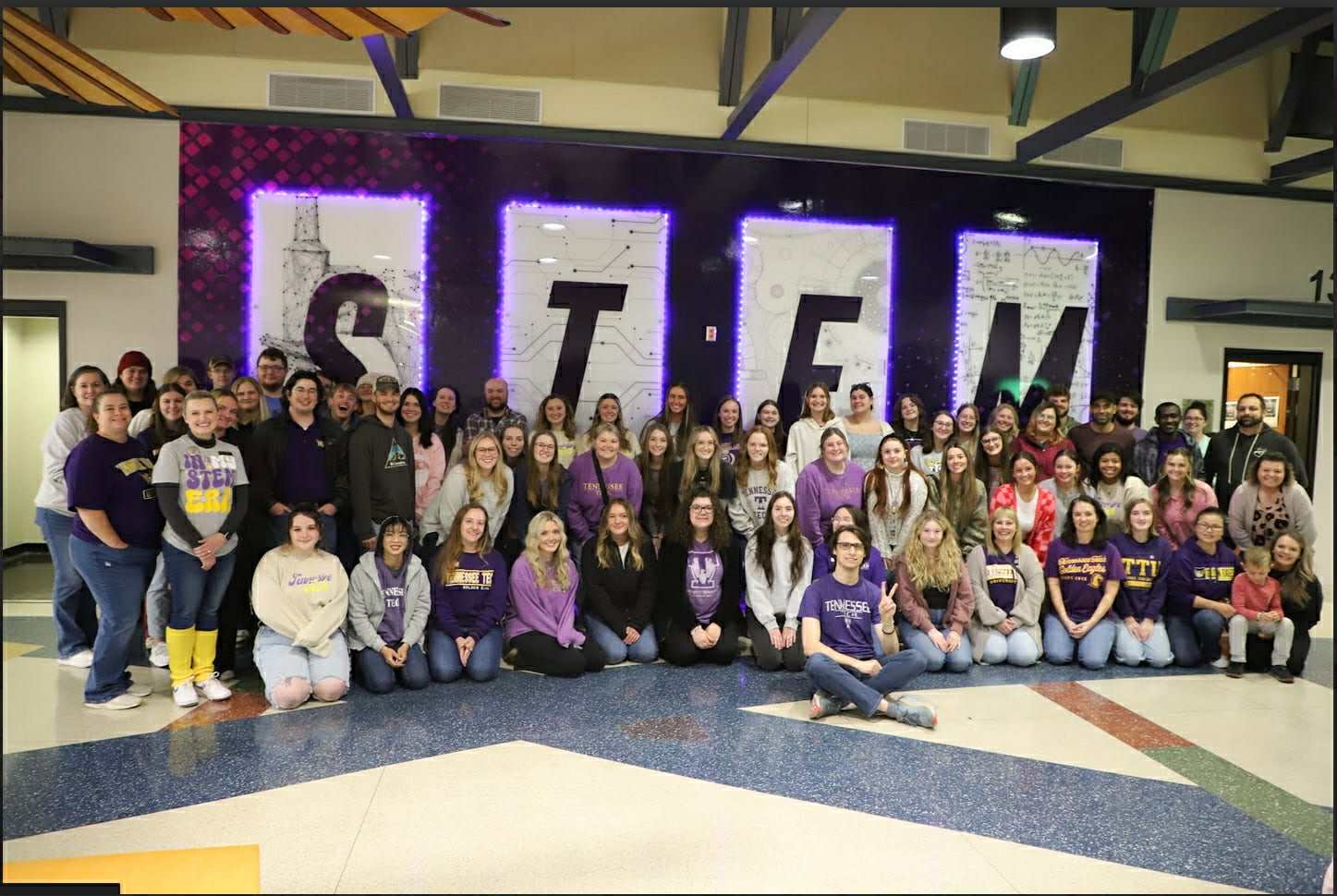
Not only did Tech develop his technical expertise, but the university also prepared him for the next step in his career. Anwar credits Tech with equipping him with the skills to secure an assistant professorship at San Jose State University, where he will continue to advance autonomous vehicle research – and he hopes to continue partnering with his alma mater.
“Tennessee Tech helped me to land this job and equipped me to be able to succeed in it. It’s a credit to the university and the mentorship I received there,” he said.
San Jose State offers a unique environment for Anwar to further test his AI-guided algorithms because California’s adoption of autonomous vehicle technology is more advanced than most U.S. states, which gives him a practical lens to evaluate and refine his work.
“Seeing autonomous cars on the road confirms the relevance of this research and the importance of preparing vehicles for greater real-world scenarios,” he said.
Anwar’s research contributes to a growing understanding of how driverless vehicles can operate safely and efficiently, even in complex traffic conditions. By integrating AI-guided algorithms with real-world testing, he’s helping to develop vehicles that can communicate, adapt and respond dynamically, which he sees as a step toward more human-centered mobility solutions.
Ultimately, the goal of his research is to make autonomous vehicles intuitive, safe and beneficial for the communities they serve, balancing innovation with human needs.
“Tennessee Tech has been instrumental in my professional journey. From hands-on lab experiences to faculty mentorship, it provided the foundation for advancing my career and research. Moving to San Jose State is an exciting next chapter, but it’s grounded in everything I learned at Tech,” Anwar said.