

Tennessee Tech launches Cyber-Redi program to expand pathways into high-demand cybersecurity careers
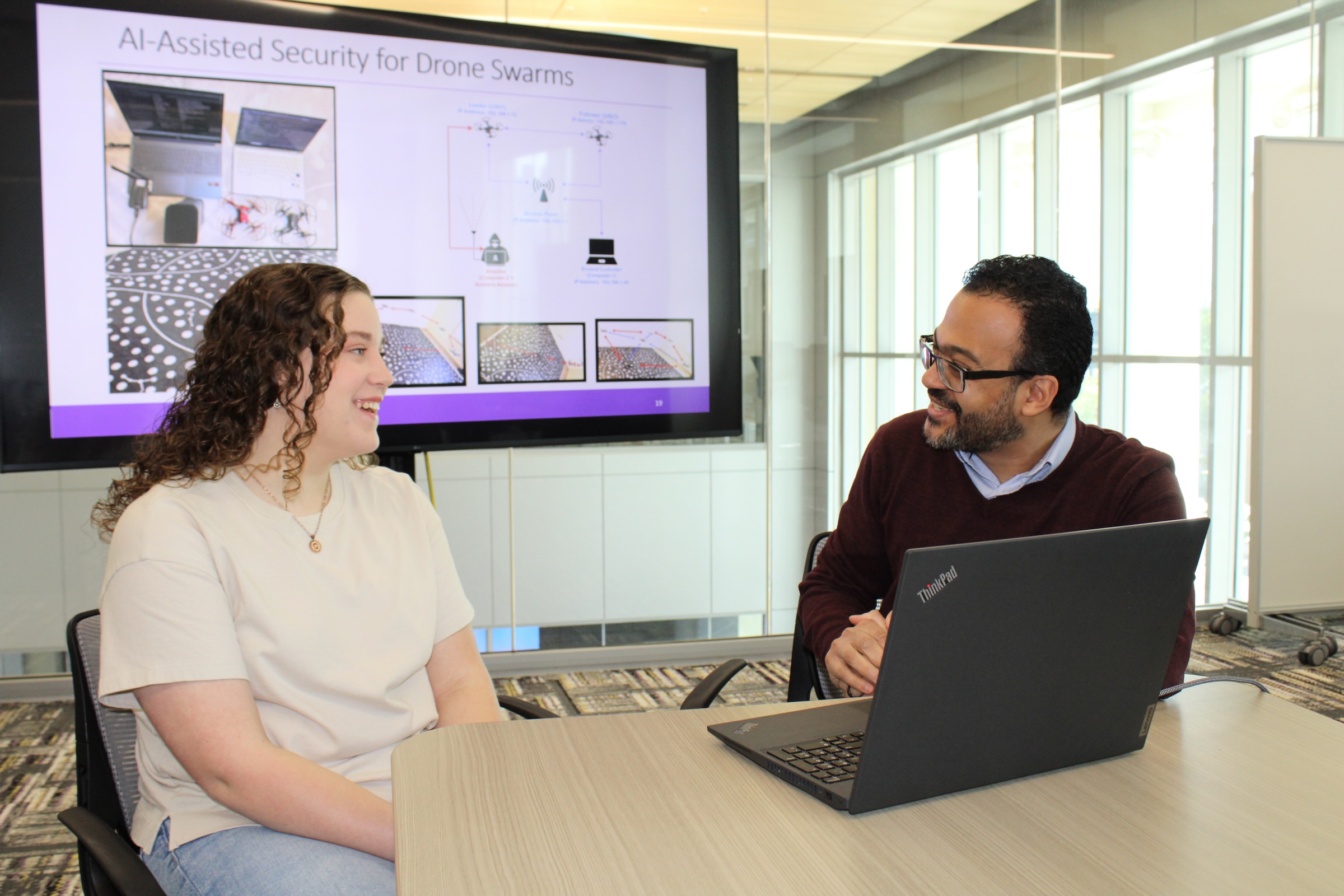
Tennessee Tech University’s Department of Computer Science has launched a new online Cyber-Redi program designed to help students from non-computer science backgrounds transition into graduate-level study in cybersecurity.
The program serves as a bridge for current undergraduate majors outside of computer science, as well as individuals who already hold a non-computer science bachelor’s degree and are seeking to enter the fast-growing cybersecurity field.
Developed in response to a significant workforce shortage, the Cyber-Redi program aims to open new pathways into cybersecurity careers while strengthening the talent pipeline in Tennessee and beyond.
“Nationally, there are more than 500,000 unfilled cybersecurity jobs, and in Tennessee alone, there are approximately 6,000 open positions,” said Muhammad Ismail, associate professor of computer science and director of Tech’s Cybersecurity Education, Research and Outreach Center (CEROC). “The demand for skilled cybersecurity professionals continues to far exceed the supply.”
Ismail added that one effective way to address this imbalance is by “attracting students from non-computer science and non-cybersecurity backgrounds and providing them with the training needed to transition into the field.”
The Cyber-Redi curriculum includes courses in principles of computing, fundamentals of programming, design of algorithms and introduction to security and privacy. Upon completion, participants earn a certificate demonstrating mastery of the core competencies required for graduate study.
“By completing the bridge program and earning a minimum grade of B in each course, students become eligible to apply to the MS in Computer Science with a Cybersecurity concentration,” Ismail explained.
In addition to building technical skills, the program emphasizes the value of interdisciplinary perspectives in cybersecurity.
“Students from other disciplines bring valuable and diverse perspectives into cybersecurity,” added Ismail. “For example, a sociology major may have deep insight into human behavior and social engineering attacks, while students from business, nursing, or education bring domain expertise that is increasingly critical in cybersecurity practice.”
Cyber-Redi is a collaborative initiative between Tech’s Department of Computer Science and CEROC. The center provided funding and support for the development of the program’s online courses, with additional backing from the Center for Inclusive Computing at Northeastern University.
Students enrolled in the program will have opportunities to engage with CEROC through peer mentoring, student-led cybersecurity clubs, national competitions, research projects and hands-on work in the university’s Cyber Innovation Lab.
The lab provides real-world learning experiences in areas such as drone security, power systems, artificial intelligence-assisted security and secure quantum communications, helping students apply classroom knowledge to emerging challenges.
The launch of Cyber-Redi builds on Tech’s growing leadership in cybertechnologies. Computer science remains one of the university’s largest academic programs, with more than 760 students enrolled across undergraduate and graduate levels as of fall 2025. The university will also introduce a new Bachelor of Science in Artificial Intelligence this fall, becoming the first institution in Tennessee to offer a baccalaureate-level degree in AI theories, systems and development.
Additionally, Tech holds the National Centers of Academic Excellence in Cyber Defense (NCAE-CD) and National Centers of Academic Excellence in Cybersecurity Research (NCAE-R) designations from the National Security Agency, recognizing the university's contributions to advancing cybersecurity research and education.
“Cyber-Redi reflects the shared commitment of CEROC and Tennessee Tech to workforce development, inclusive pathways, and regional impact,” concluded Ismail. “By expanding access to cybersecurity education and supporting students from diverse academic backgrounds, we are strengthening both our university and the regional and national cybersecurity ecosystem.”
An informational session for interested students will be held Thursday, April 16 from 11 a.m. to noon in room 203 of the Ashraf Islam Engineering Building. Students can register to attend in person or virtually here.
The application deadline for this year’s Cyber-Redi cohort is April 30 and classes begin May 11. Students can apply here.