
Tennessee Tech students pitch business ideas, earn scholarships at Eagle Works 2026
Some of Tennessee Tech University’s most entrepreneurial students pitched business ideas during Eagle Works 2026, an annual competition hosted by the university’s Center for Rural Innovation. The event follows a “Shark Tank”-style format, with students presenting ventures to a panel of judges who award scholarship funding to winning teams.
The competition capped a full day of collaboration, idea-sharing and presentations and marked the culmination of months of work for participants.
This year’s Eagle Works competition featured 20 teams and more than 50 students representing three colleges and 13 academic programs. From first-year students to Ph.D. candidates, participants collectively invested more than 3,000 hours developing ideas aimed at solving real-world challenges.
Seven teams advanced to the final round, where they presented to a panel of business leaders, entrepreneurs and community partners.
“I never envy our judges,” said Andrea Kruszka, director of strategy and engagement for the Center for Rural Innovation. “Every year we see incredible ideas from students, and their drive and creativity make the competition extremely difficult to judge.”
Projects this year spanned industries ranging from financial education and tools for educators to innovations in agricultural technology. Many teams entered the competition with early-stage concepts and finished the semester with solutions strengthened through mentorship, workshops and feedback.
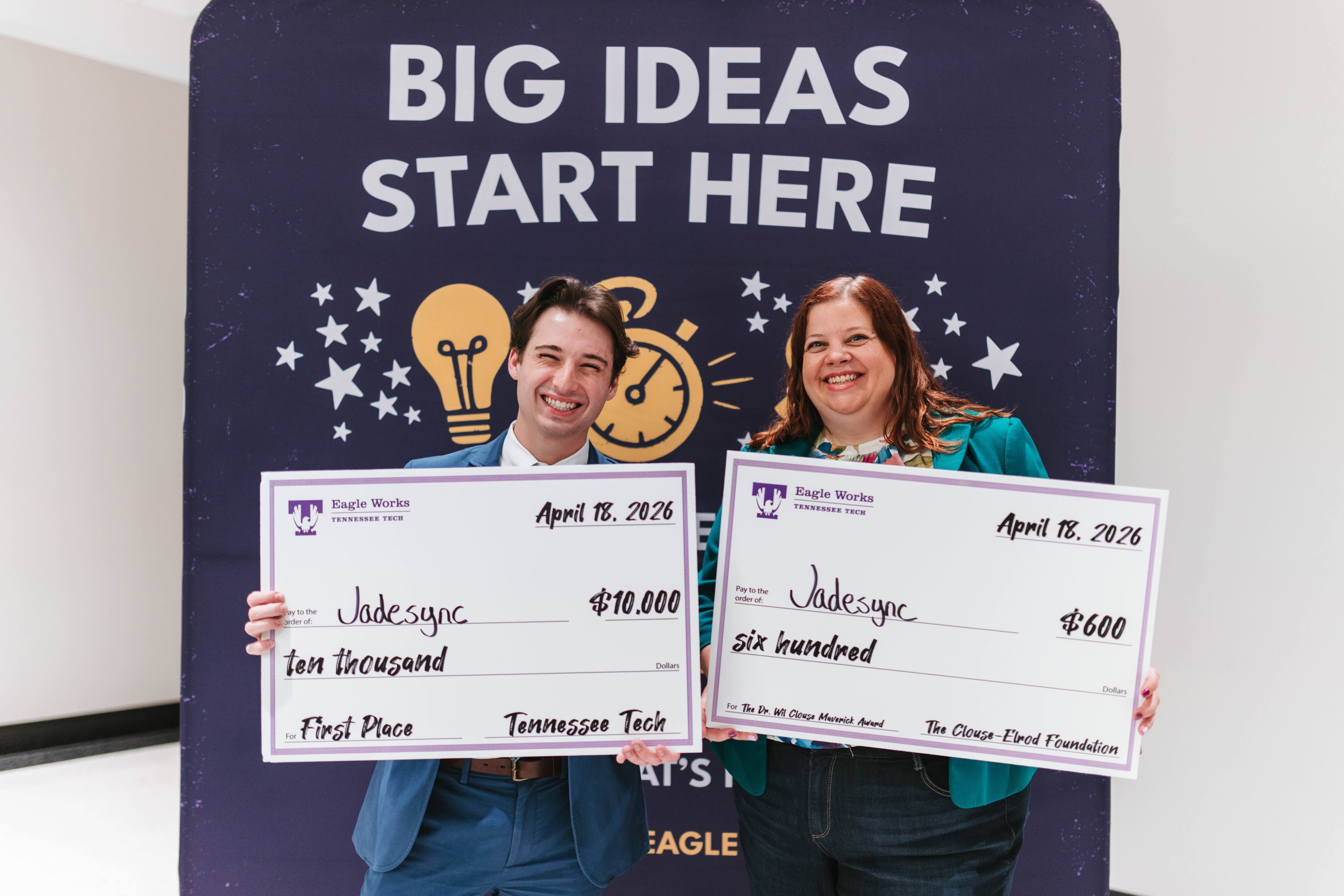
Top honors went to Jadesync, which earned first place and the Dr. Wil Clouse Maverick Award. The project received $10,600 in scholarship funding.
Created by Charles Jones, Jadesync is a platform designed to help high school and college students better understand and manage their finances. The tool combines budgeting, investing and financial education into a single experience and already serves more than 6,000 users across multiple campuses.
Second place and a $5,600 award went to Campus Connect, a personalized platform designed to reimagine how students search for colleges. Developed by Mahala Boone, Esma Fidan and Kirsten Wright, the platform aims to simplify the college search process and create a more intuitive experience for students.
Third place and a $3,500 award went to Edura, a web application designed to reduce administrative burdens for special education teachers. Created by Joseph Shinkle, who witnessed those challenges through his brother’s experience, the platform has already gained local traction. Shinkle is working with special education teachers and district leaders to validate the concept and hopes to launch a pilot program with Putnam County schools this fall.
Additional awards recognized innovation in rural technology, community-focused problem-solving, and outstanding presentation and engagement during the event’s tradeshow.
Organizers say the true impact of Eagle Works extends beyond the competition itself.
“The most meaningful part is watching students grow into confident builders,” said Lena Mayberry, communications and marketing strategist for Eagle Works. “They start with an idea, and by the end, they’re presenting real solutions they’ve tested, refined and are ready to take further.”
That growth is supported through workshops, mentorship and iterative feedback, encouraging students to move beyond concepts and into execution.
“Programs like Eagle Works are critical to building the next generation of problem-solvers and leaders,” said Michael Aikens, executive director of the Center for Rural Innovation and acting vice president for research and economic development at Tech. “When students have opportunities to tackle real challenges and connect with industry and community partners, the impact extends far beyond the classroom.”
For many students, the experience leaves a lasting impression.
“It’s honestly hard to put into words what this means to me,” said Jones, reflecting on the project he has spent nearly two years developing. “There were a lot of moments where I wasn’t sure it would turn into something real. Being able to present it and have it resonate was huge. Now it’s about executing. I’m focused on continuing to build the product and getting it in front of more students who can benefit from it. Eagle Works gave me real momentum.”
Eagle Works is supported by sponsors including the Tennessee Rural Development Fund, the Clouse-Elrod Foundation and the Keen Family Foundation, with partnership and mentorship from The Biz Foundry, the Small Business Development Center and a network of judges and workshop leaders who contribute their time and expertise.
As the event continues to grow, Eagle Works remains focused on its core mission: creating opportunities for students to think bigger, build boldly and turn ideas into action.