

Tennessee Tech represented in 'Restoring Childhood' initiative to promote real-world connection in a digital age
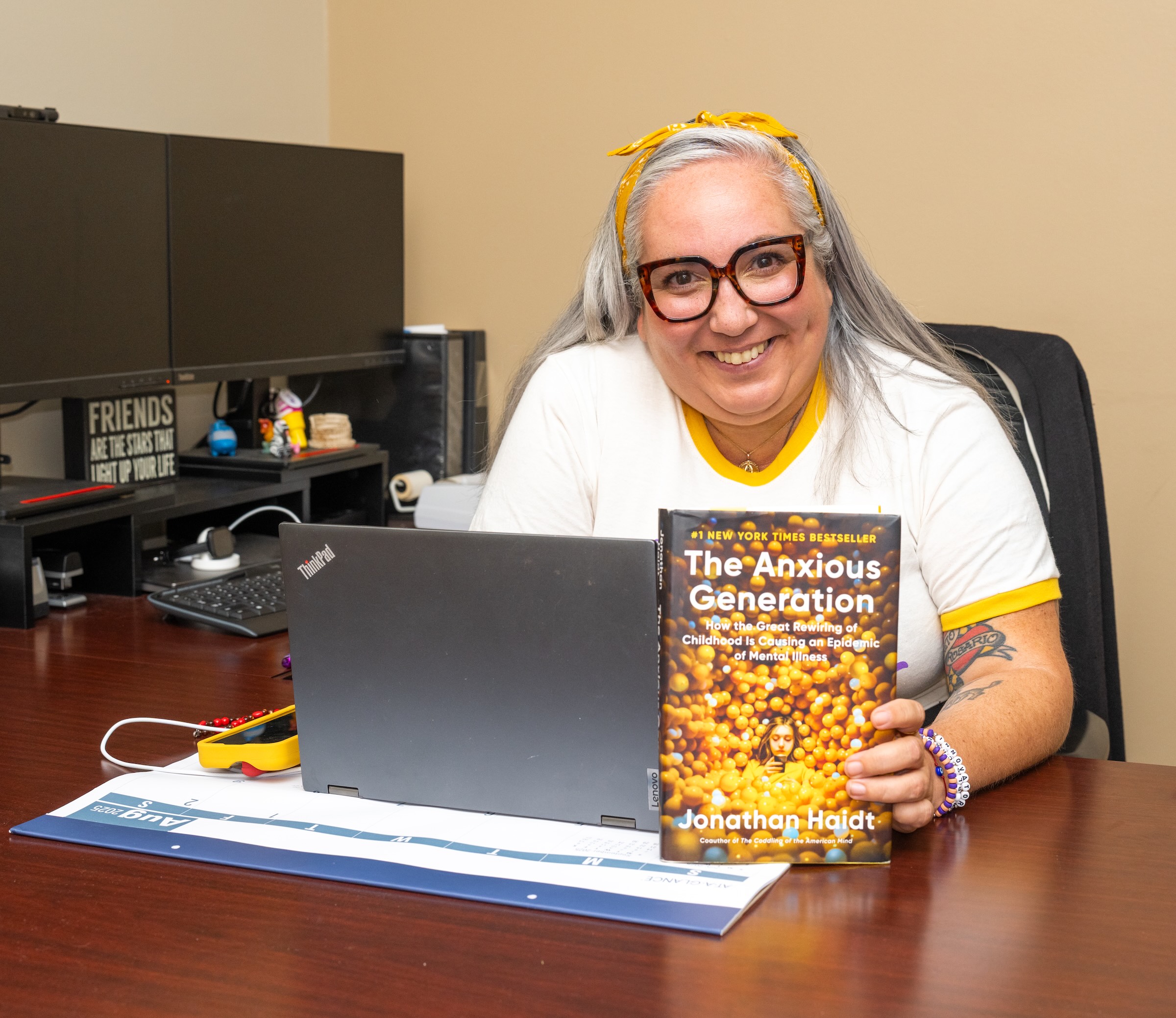
Lettie Collier, office manager for Tennessee Tech's Center for Rural Innovation, pictured
with the book "The Anxious Generation," which helped first inspire the formation of
the Restoring Childhood initiative.
It's fitting that several Tennessee Tech University professors have joined a community
coalition examining ways to increase creative play for children and families in Putnam
County, because a reading recommendation from a Tech employee is what first sparked
the coalition's launch.
Avery Trace Middle School teacher Ryan Dalton developed Restoring Childhood initiative
after Tech's Lettie Collier recommended reading The Anxious Generation by Johnathan Haidt. The book explores how social media and screens have transformed
childhood in ways that contribute to anxiety and isolation.
The grassroots community movement focuses on creating conversations and activities
to help children and families reduce anxiety and mental distress caused by excessive
screen time and digital distractions.
“This coalition exemplifies how academic expertise and community collaboration can
make a real difference in the Upper Cumberland region,” said Collier, who is a grants
administration specialist in Tech’s Center for Rural Innovation, which itself supports
ways to improve rural economic development and living.
As someone who juggles multiple projects and roles both on campus and off, Collier
said she’s excited that an initiative whose origin can be traced to her reading recommendation
has such widespread campus and community buy-in. In addition to Tech, it includes
every public education institution in the county, Putnam County Library, Plenty Downtown
bookshop, other business leaders, elected officials, churches, counselors, therapists,
other healthcare providers and more.
Community engagement is what drew Tony Michael to the coalition, he said. Michael
is a professor of Counseling and Psychology at Tech and a registered play therapist.
“Anxiety in children today is a complex issue, and it can often be linked to social
media and excessive screen time,” he said. “The goal is to promote healthier habits
by encouraging authentic human connection, outdoor play and opportunities for creativity
and social interaction that are critical for emotional development.”
Michael added that the initiative isn’t about creating shame regarding digital and
social media; they are, after all, nearly essential tools for modern communication
and work.
“The coalition is not about shaming technology but about reclaiming balance. By fostering
environments where children can play, explore and be present, we can help them build
resilience and reduce anxiety,” he explained. 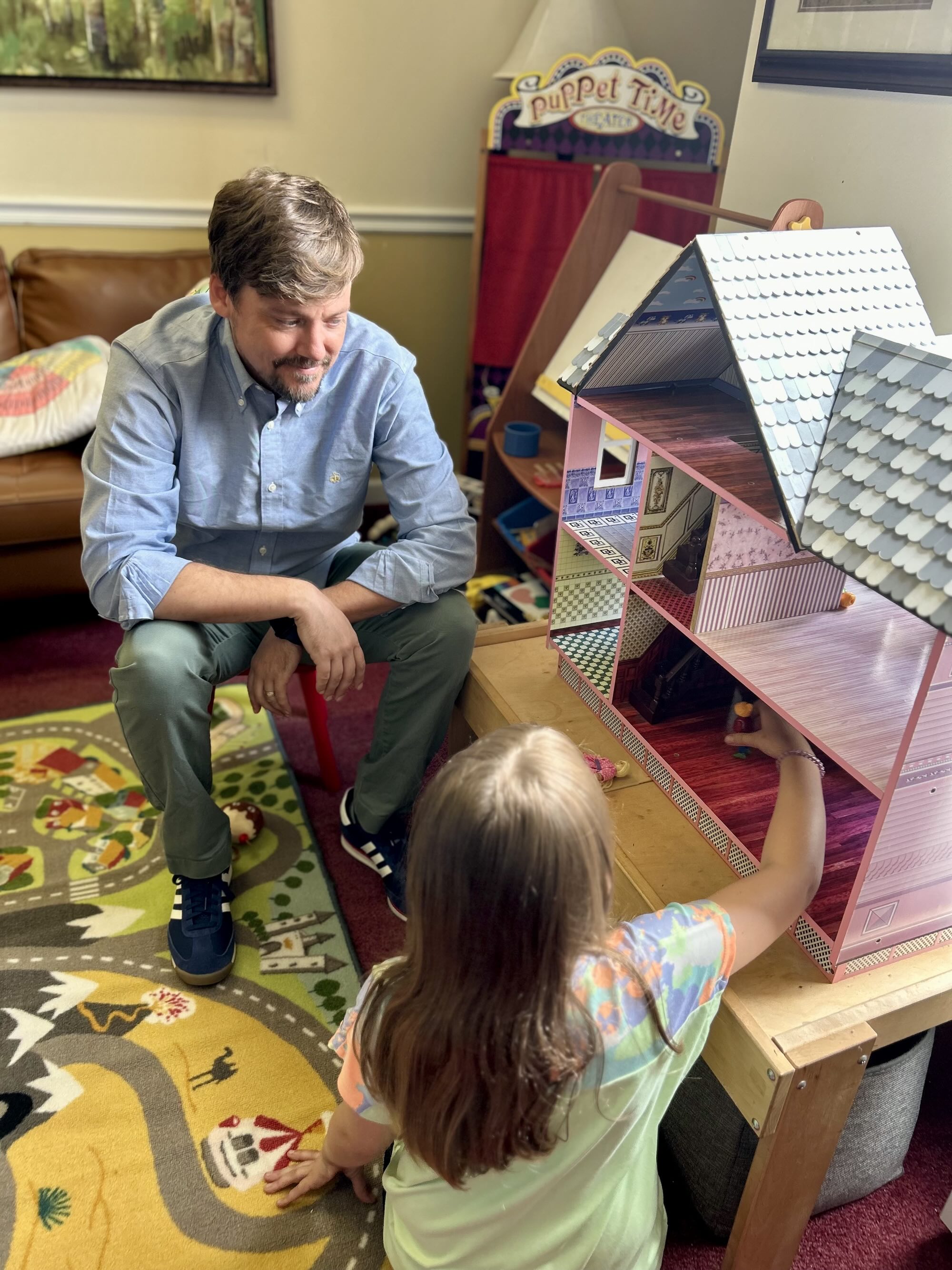
Tony Michael, professor of counseling and psychology at Tech, is pictured with his
daughter, Eleanor.
Children today are growing up in an environment – with its own opportunities and challenges
– that no generation before has faced. While it’s impossible to turn back the clock
to simpler times, we can be intentional about giving kids the space simply to be kids,
Michael said, because creative play is how children first learn to interact with and
learn about the world.
“If we want to see healthier, more resilient kids, we must build communities that
model and encourage balance. That means showing them that joy, connection and creativity
aren’t found in a feed – they’re found in real moments with real people,” he said.
Central to the coalition’s activities and guiding local conversations are in-person
community reads of Haidt’s book, beginning now and running through December.
Participants will also engage in storytelling, reflection and planning to support
screen-free, meaningful interactions that nurture childhood development and family
wellbeing – but flexibility is key, Collier said.
“Some people will be able to read every chapter or become absorbed in the audiobook.
Others may only skim or come just to listen. Everyone’s welcome,” she said.
Michael agreed that participating in the coalition or adopting different online media
habits shouldn’t feel complex.
“This coalition isn’t about telling families what to do; it’s about offering ways
to make screen-free time something people look forward to,” he said. “Restoring childhood
is about simple, actionable steps. Shared meals, laughter, time outdoors – these are
powerful antidotes to the digital overwhelm kids face today.”
Other Tennessee Tech representatives participating in the coalition include Tania
Datta, professor of Civil and Environmental Engineering; Josh Hall, assistant professor
of Biology; and Beth Anderson Walker, lecturer of Counselor Education.
For more information about the Restoring Childhood Coalition or to find out where
community book studies are near you, visit its website at: https://www.restoringchildhoodputnamcounty.com/.