

Tennessee Tech professor presents at international chess education summit
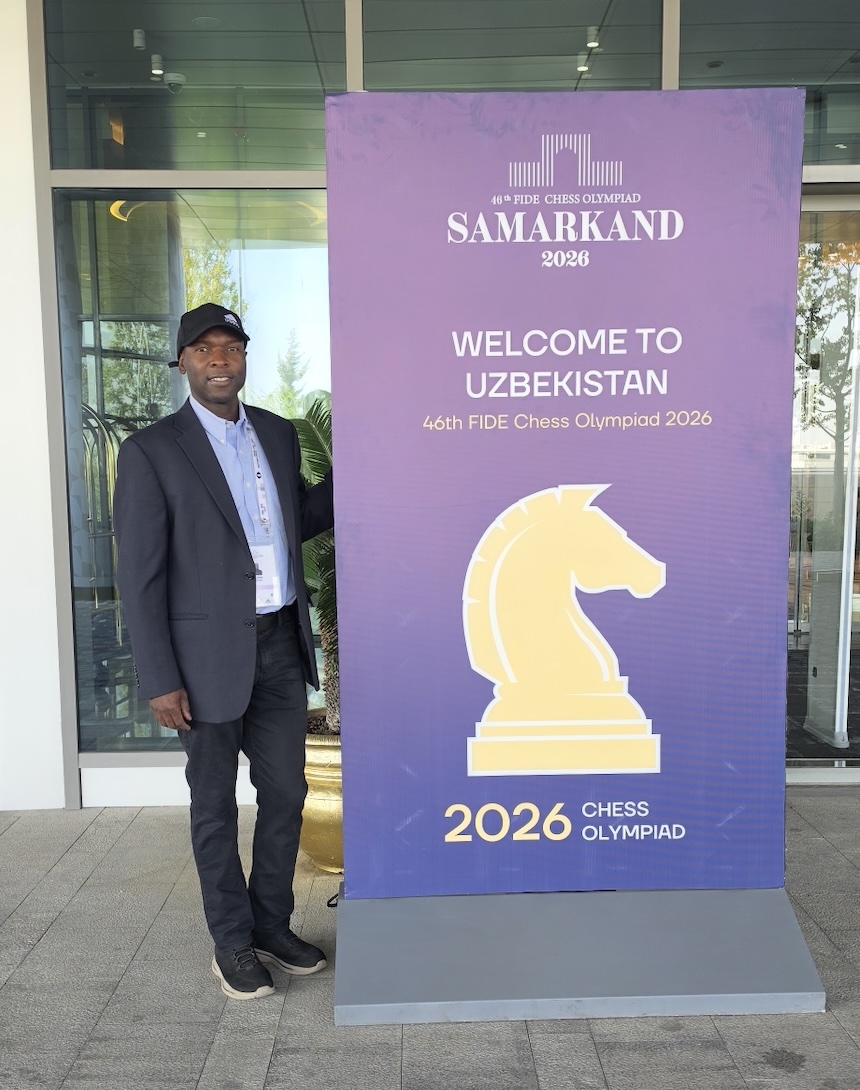
George Chitiyo, professor of educational research and evaluation at Tennessee Tech University, recently presented at the International Chess Federation (known by its French acronym FIDE) Summit on Chess in Education in Samarkand, Uzbekistan.
Held alongside the FIDE Chess Olympiad and Congress, the summit centered on the theme “Every Lesson Counts” and brought together internationally recognized voices in chess education.
“We were in the same room as politicians, educators, federation leaders and decision-makers who help shape funding, curriculum and the future of chess programs,” Chitiyo said. “As a researcher, you want your findings to reach the people who can do something with them, and this summit provided that opportunity.”
At the summit, Chitiyo shared findings from his research examining the global state of chess in education. The study explored how educational chess programs are organized, implemented and developed around the world.
A highlight of his presentation was the introduction of the Chitiyo-Atkins Model of Chess Program Development. Chitiyo developed the model with Rita Atkins, an educator, secretary of the FIDE Chess in Education Commission and Woman International Chess Master. The model is intended to help countries, chess federations and local programs assess their current development, identify priorities and establish realistic, tangible milestones.
As educational chess programs continue to expand worldwide, Chitiyo hopes emerging programs can learn from successful initiatives in countries such as Kazakhstan, Uzbekistan, China, India and Armenia, adapting those lessons to meet local needs.
“A chessboard gives students opportunities to think ahead, weigh their options, solve problems and learn from their mistakes,” Chitiyo said. “Those are skills we want students, and adults too, to develop.”
Chitiyo credited the continued support of Jeremy Wendt, chair of Tech’s Department of Curriculum and Instruction, and Lisa Zagumny, dean of the College of Education and Human Sciences, with helping expand his international research and collaborations. He also pointed to his work with fellow chess education researchers and educators as key to the research’s growing reach.
“I am honored to be working alongside my esteemed colleagues Jerry Nash and Rita Atkins, and my key collaborator in chess research, Lisa Zagumny,” Chitiyo said. “The work that we started years ago keeps getting traction and gets more visible.”
Through those collaborations, Chitiyo seeks to help educators turn growing interest in chess into well-planned programs with clear goals, achievable milestones and meaningful evidence of student learning.
To learn more about FIDE’s global chess education initiatives, click here.