

Today, utility providers use smart grid technology to digitally sense and control interruptions and fluctuations in energy consumption and maintain a reliable outflow. However, by its digital nature, smart grid technology is vulnerable to cyber attacks.
Mohammad A. Rahman, Ph.D., assistant professor in the Department of Computer Science in the Tennessee Tech College of Engineering has been awarded a grant for $174,973 from the National Science Foundation (NSF) to identify efficient and affordable solutions to defend against cyber-physical threats to energy system technology.
With the rise of cyberwarfare, critical infrastructures like smart grids have become more vulnerable as targets, Rahman said. Our cybersecurity research at Tech will focus on developing defense strategies to keep these infrastructures secure and resilient.
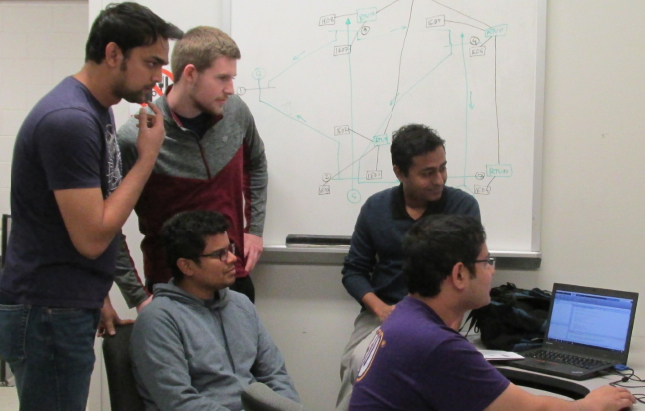
Graduate and undergraduate computer science students Amarijit Datta, Mehedi Hasan, AHM Jakaria and Brian Ledbetter are assisting Rahman with his research.
Rahman has proposed a unique framework integrating formal verification theories with model simulations, data/control flow and security concepts to advance the science of cyber-physical systems security analysis. The grant, which is supported under the NSF Computer and Information Science and Engineering Research Initiation Initiative program, will begin in May 2017 and carries a duration of approximately two years.
Dr. Rahman s research addresses a critical need for the state of Tennessee and our nation, said Jerry Gannod, chair of the Department of Computer Science at Tech. His work demonstrates Tech s growing leadership in cybersecurity education and research and will help us continue to attract some of the best undergraduate and graduate talent for study at Tech.