

Interview with Athletic Director, Casey Fox
Biography
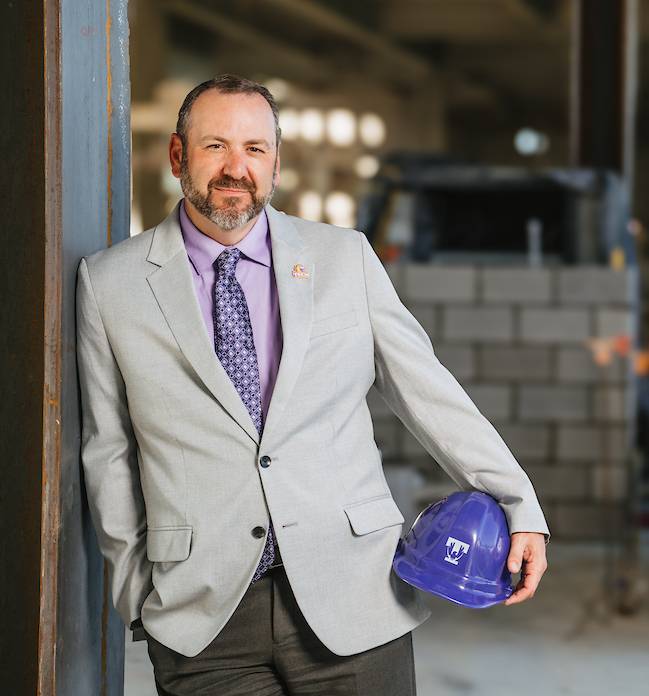
Casey Fox brings more than 25 years of Division I athletics experience to his role as Tennessee Tech University's director of athletics. Known for his collaborative leadership style, competitive drive and commitment to student-athlete success, Fox has built a reputation for strengthening athletic programs through strategic fundraising, fan engagement and strong support for coaches and staff. Before joining Tennessee Tech, Fox served as deputy athletic director at Montana State University, where he helped lead fundraising efforts for a $26.5 million indoor football and track facility, oversaw record-setting attendance for Bobcat athletics and launched initiatives that more than doubled annual athletic giving. A graduate of the University of Oregon, Fox earned a master's degree in sports management from Eastern Washington University. He and his wife, Heidi, are the proud parents of two sons, C.J. and Bo.
Kaitlin Kotasek (KK): Thank you for taking the time today! Please tell us a little bit about yourself.
Casey Fox (CF): I was born and raised in Walla Walla, Washington, and my dad was a school teacher. My mom was a small-college administrator who worked in financial aid. I attended the University of Oregon as an undergraduate and earned my graduate degree in Athletic Administration and Physical Education from Eastern Washington University. It was there that I got my start in college athletics as a graduate assistant. My first full-time job was at the U.S. Naval Academy in Maryland, where I spent three and a half years as the assistant director of marketing. I became the director of athletic marketing at the University of Utah. Following that, I moved to Washington State University, where I served as marketing director for five years before transitioning into fundraising. I then worked as the university's athletic development director for two years. During my final three years at Washington State, I worked for the College of Agricultural, Human, and Natural Resource Sciences, raising money for the wine sciences program. We built a wine research center and helped secure funding for that project. I then returned to athletics as deputy athletic director at Montana State University, where I spent eight years. That role ultimately led me to Tennessee Tech in July 2025.
KK: What is your favorite part of your role? What motivates you to do what you do?
CF: My favorite part of the career I've chosen is being part of a college campus. It keeps
your mindset young. It's that, but it's also striving to win to build something meaningful,
and lasting. We have such an opportunity here at Tennessee Tech to build a program
that is successful. We're aligned with upper administration. We have some great coaches.
We have already changed some things and it's going to take some time, but there's
an opportunity to really make some waves. Especially as we've moved into the Southern
Conference (SoCon) and are realigning with schools in North Carolina, Georgia, Alabama,
and obviously here in Tennessee, there's such an opportunity to grow and build Tennessee
Tech athletics into something that people are proud of. That people, the day after
a game, are proud to put on a Tennessee Tech shirt or sweatshirt or hat. That's what
motivates me. That's what drives me.
KK: Let's talk about some of your experiences and how that has cultivated your leadership
style. What experiences guide you on how you lead here?
CF: It's just a combination of all my experiences. I've been working in college athletics
since the late 90s, and you take bits and pieces from every stop. You always think
“If I were ever in charge of this” and now that I am, it's implementing some of those
things and expectations I have of our student athletes, our coaches, and our staff.
I think that's the hardest thing with taking over is developing that culture of expectations.
We need to be prepared for success.
KK: Tech has had some great success across different programs this last year. How
do you plan to keep that momentum?
CF: We need to continue investing in all of our programs. It is also about raising revenues
and reinvesting it back into it the programs. That's why it is important to get out
and connect with alums, donors and supporters and share stories. Last fall, the women's
soccer team won their fourth conference championship that earned them a spot into
the NCAA tournament. We have a challenge in front of us now that we are in the Southern
Conference (SoCon). We've got to invest more in soccer so they can compete in the
SoCon. We are obviously investing in football and in my opinion, that is what will
drive success. The more football has success, the more people will come and buy tickets
and donate. It's about maintaining and never being satisfied with the success you’ve
got and relying on it. We’ve got to continue to move forward and push and try to strive
to be as good or better each and every year.
KK: How do you plan to honor Tennessee Tech's history while bringing fresh ideas for
the future?
CF: One saying that has always stuck with me is, “you honor the past, you live the present,
and you plan for the future,” and I believe in that. On the field or not, those that
have come before have laid the groundwork for where we are today. Tech alums, whether
they won one game in football or 40 games, it doesn't matter. We want to make sure
that they're embraced and part of the program. Now, I also want to grow our connection
with our alums that weren't athletes as well. I want them to be proud of being a Tech
grad, and if the football team is doing well, great! I want them to wear their purple
shirts. If it's basketball, baseball or if you were part of the marching band, it's
all part of what we're trying to do. It is part of this big community that is Tennessee
Tech University, and we're just a piece of that.
KK: What are your ideas for energizing the Tennessee Tech community and increasing
fan support?
CF: From a football standpoint, this fall we have started strong and with the west side
stadium renovation coming online, we have made some changes. We have reserve seats
on both sides of Tucker Stadium. We have some great fan amenities with a club level
and a suite level. On the west side, all seats are stadium chair back, which is nice.
We're looking to expand our amenities on the east side as well. We still have almost
two-thirds of our fans over there, including students. We moved to reserve seating
on the east side and created an actual student section in the stadium. We have some
ideas around new concession areas, food trucks, and other amenities to expand the
footprint of the east side because again, if two-thirds of our fans are over there,
we need to cater to their needs and wants. We've gone out and secured a partnership
with a third-party multimedia rights holder, so they're starting to sell corporate
advertising and sponsorships. We're all fighting for entertainment dollars, so we
need to provide a product on the court and on the field that people want to come and
watch.
But in the downtime, we need to provide entertainment. I think we need to explore
all opportunities, pre-game post-games, in games. What are those things and what's
going to drive and engage students to come to our events? I can tell you that one
of the things that we have implemented is alcohol sales throughout Tucker Stadium.
Those that want to enjoy an adult beverage that are 21 and over, they'll be able to
take their beverage and sit at their seat. But ultimately, if we're not winning on
the field of play and on the court, I'm not sure it's going to matter. It all goes
back to investing in our programs and into our coaches, administrators, and our student
athletes themselves. That's the day and age we live in. So, we’ve got to win.
KK: What are some things you like to do in your personal life?
CF: I like to golf. I actually met my wife on a golf course almost 27 years ago. So,
golf, travel; I like movies as well. We have 2 boys, C.J. and Bo. CJ just started
his freshman year at Pacific University in Oregon, Bo is a junior at Upperman High
School, over the years, a lot of our time has been taken up by their activities.
KK: What would surprise parents to know about you?
CF: I was an extra in a movie once. It was a movie filmed on campus at the University
of Oregon about Steve Prefontaine named Without Limits. I was an extra as a U.S. Olympic
athlete. I was supposed to be in two scenes, and one got cut out. If you know where
to look, you can see me walking through.
KK: What message or advice would you want to give to the parents and families of
the Parent Association?
CF: My son started college this fall. I just told him that you're going to enter as a
kid and you're going to exit as a young adult, and I've always seen college about
education, but also a time to mature and grow up and make decisions, both good and
bad. I feel students, especially on a campus like Tennessee Tech, should take advantage
of this time in their life and get involved in campus life. And that's not always
on campus, but it's Cookeville. You're in a safe community here in middle Tennessee
on a beautiful campus. I would like to see our students be more ingrained in student
life, staying around on the weekends and being a part of it. It goes beyond just coming
to class Monday to Friday. It's about those four (ish) years and becoming an adult.
I think back to years ago when I went off to college, and I was not sure if I was
going to be homesick or not. I got to college and I had a great time. I never went
home because I met lifelong friends on campus. I would encourage our students to embrace
it and enjoy this time because there's enough time after college, you know, the pressures
of real life. But to have fun and enjoy it and get your work done; I embrace the whole
aspect of college life.