

Cory Gleasman
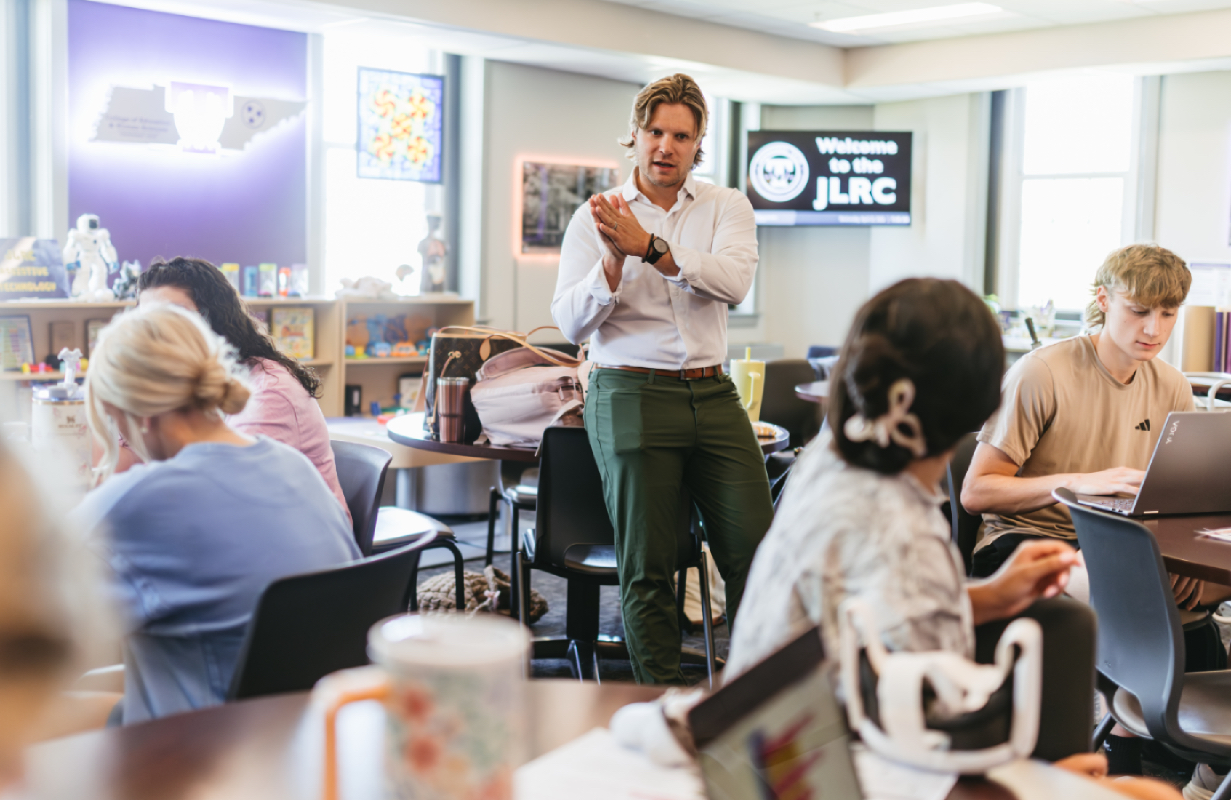
Cory Gleasman, Ph.D., a professor in the College of Education and Human Sciences at Tennessee Tech, uses the Innovation Station in Bartoo Hall on Tennessee Tech’s main quad in order to teach upcoming educators how to incorporate robotics and mixed reality in the classroom.
Mixed reality is the ability to interact with the virtual world and reality simultaneously. “Like the new Apple Vision,” Gleasman said. Apple Vision is a pair of AI sunglasses that allow users to interact with the digital and physical world simultaneously.
All undergraduates in the College of Education and Human Sciences must go through
the station’s program, Mars Mission. In Mars Mission, students collaborate across
multiple mediums to collect rocket fuel tanks to return an ice core back to earth.
“It’s a true STEM exercise; it engages math, science, engineering and obviously technology,”
Gleasman said.
In April 2026, College of Education began work with Kai’s Education Company in New
Zealand through a partnership which allows cross platform and cross-cultural collaboration
for student success. 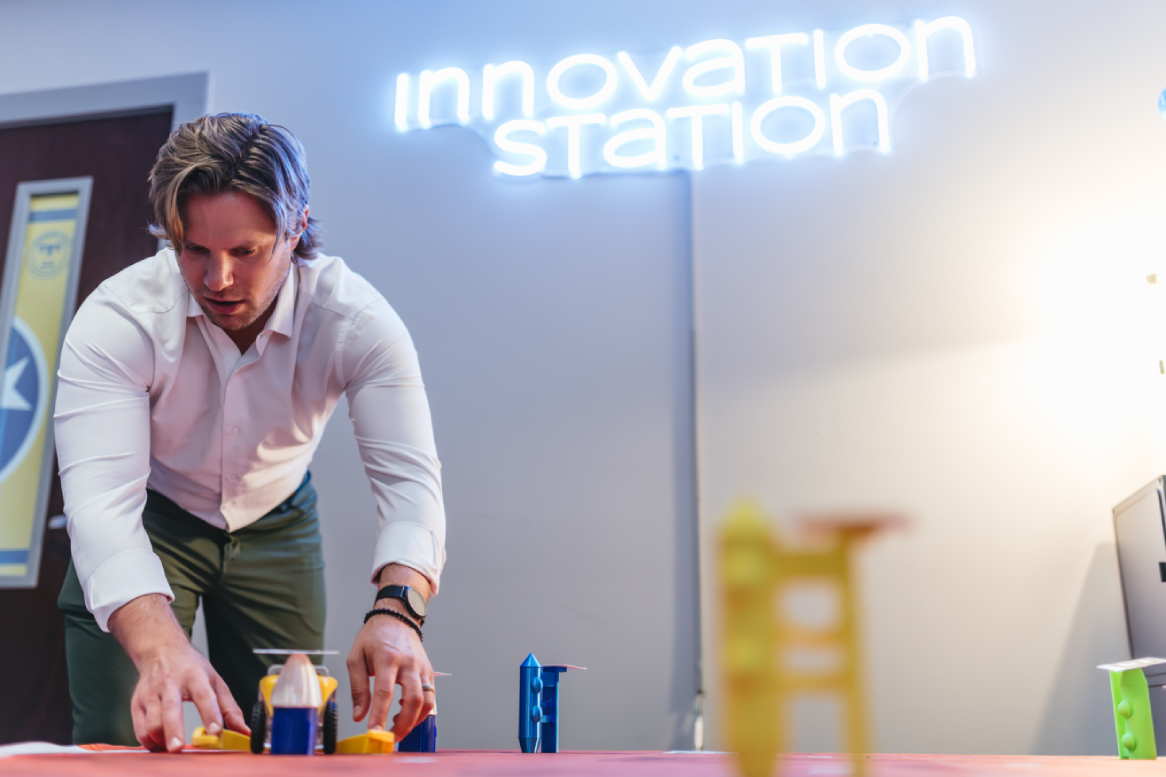
“It showcases we can perform this type of learning with school districts across the
country and, more importantly, in rural school across Tennessee who may not have the
funds to buy such technology,” he said.
Gleasman noted the world is changing. Jobs or tasks are no longer all in-person or
all online. People are collaborating on a mixture of mediums, so Mars Mission helps
prepare students for that.
He teaches in an educator preparation program where they train undergrads who will
eventually get licenses and become teachers. He also teaches Instructional Design
at the graduate level where he shows teachers how to cultivate the most suitable learning
environment. He said, “There’s a lot of different styles and theories that go into
learning at a young age.”
Gleasman’s research primarily focuses on adolescents. “My passion is learning how
to teach programming to children. How do they start to become computational thinkers,”
he said. He is interested in how children develop intellectual thinking skills.
Although he is mainly interested in how children learn, he is interested in the adult process as well. He mentioned that children often are more intuitive learners than adults. Educational theories, with exceptions, can be applied to almost all age groups.
“No one ever stops learning,” Gleasman said. “We’re learning throughout our lives.”