
“It’s about bridging gaps.” Deaf Tennessee Tech instructor offers American Sign Language courses
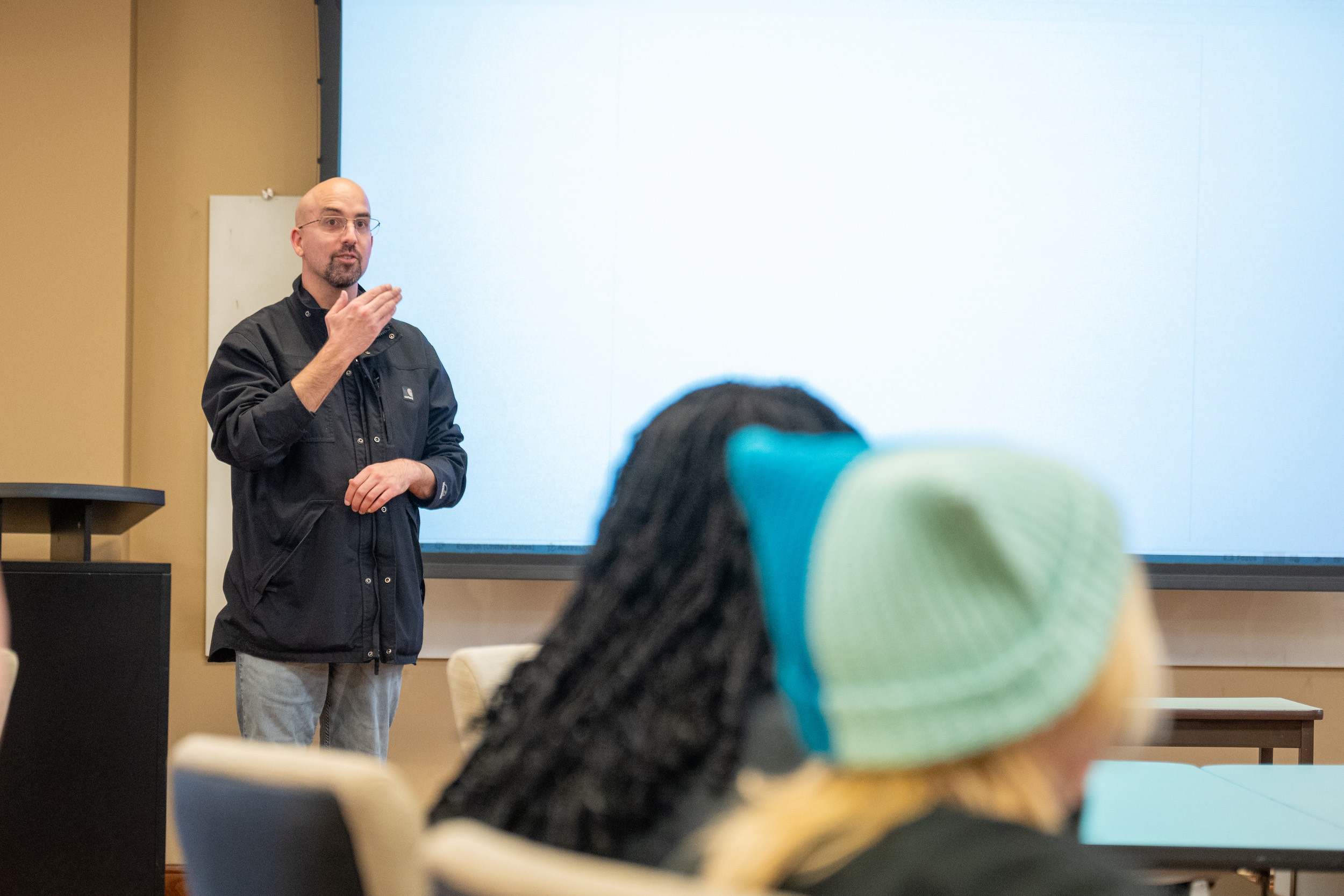
Brett Koch instructs one of his American Sign Language courses at Tennessee Tech University.
Most Tennessee Tech University students would say they’ve never had an instructor
quite like Brett Koch.
Koch has been an instructor of American Sign Language at Tech for two years, and his
life experience uniquely positions him to teach the topic. Koch lost his hearing when
he was only six months old.
“Since I lost my hearing so young, I’ve always identified as deaf. I don’t remember
having hearing,” he said.
For children, communication methods vary, and for Koch, ASL was something he learned
gradually.
“I don’t remember when I started learning to sign – probably when I was around four
years old. When my parents found out I was deaf, they started learning some signs,
but it was initially a mix of signing methods,” he said.
He didn’t begin fully learning the language until he was a senior in high school,
but from there, Koch says, his interest in it grew exponentially. He earned a bachelor’s
degree in ASL studies from Western Oregon University in 2013, initially intending
to pursue a career teaching other deaf people, but along the way, he said, his plan
shifted toward teaching ASL itself.
He completed a master’s degree in teaching ASL from the University of Northern Colorado,
which prepared him for roles in higher education. After a stint as a lecturer at Purdue
University, Koch joined the Tech faculty in 2023. After a semester teaching part-time,
he was hired into a full-time position with Tech's College of Emerging and Integrative
Studies the following semester.
“I wanted to find a place where I could teach in person and make a real impact, and
I’ve found that place at Tennessee Tech,” Koch said.
While his teaching methods do combine the traditional classroom setting with asynchronous
online learning, he strives to create a fun and welcoming environment for all his
students.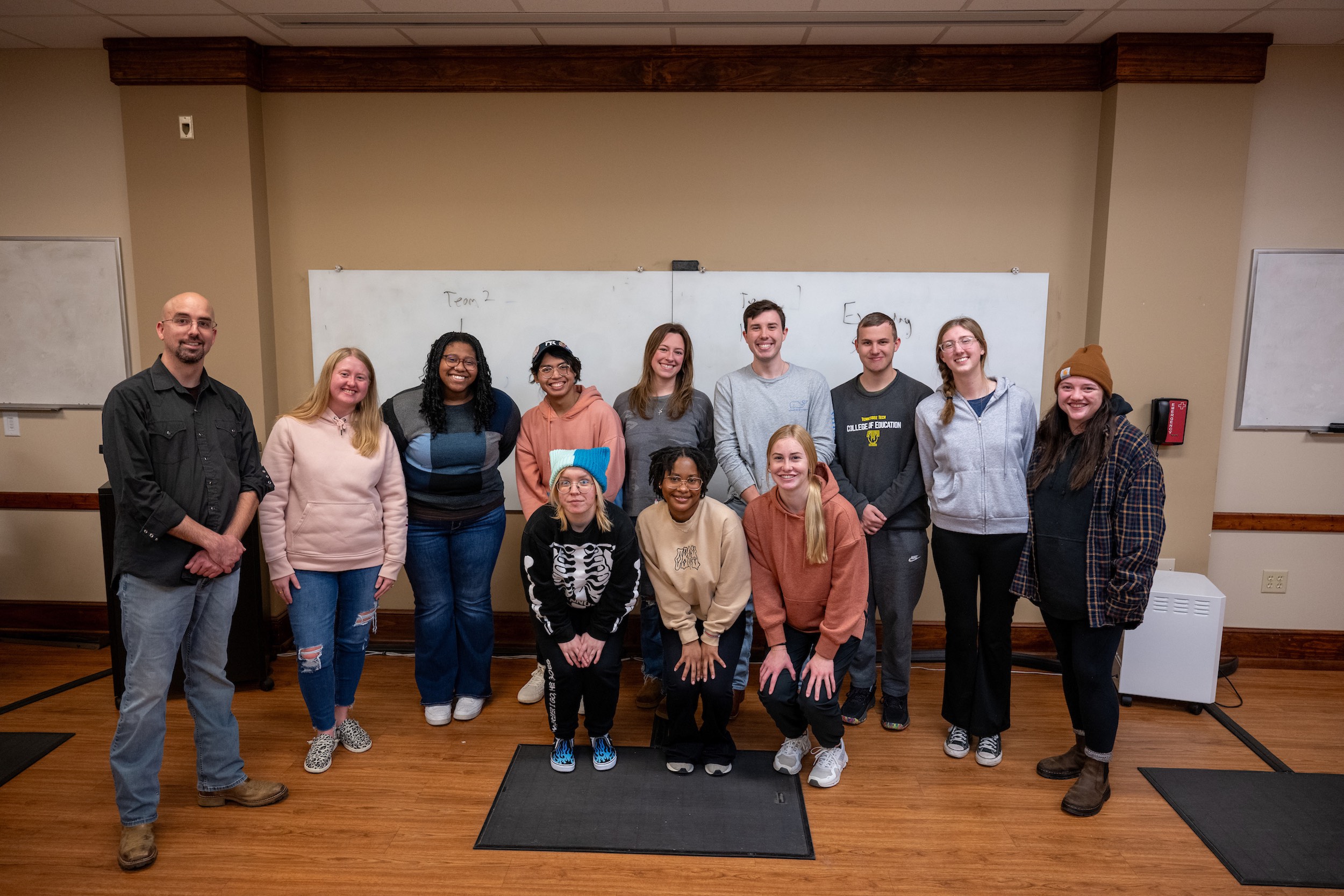
Brett Koch, left, is pictured with students in one of his fall 2024 American Sign
Language courses.
“Most students have had limited experience interacting with a deaf person before.
Many have never even met a deaf person,” Koch said.
But he doesn’t typically rely on audible language in his classroom either, opting
instead for an immersive ASL experience.
“I’ve found that it’s too easy for audible language to become a barrier to learning
ASL. Students fall back on it easily because that’s what they know, and it makes learning
ASL more difficult,” he said.
Another common concern for students, Koch said, is looking silly.
“They’re afraid of looking silly because ASL is such a visual language. The movements
look and feel funny at first, but I remind them that it’s a fun language, too,” he
said. “It may feel silly until students practice enough to gain fluency and confidence,
but that’s the way it’s supposed to be.”
Finding the fluency is a challenge all new students of foreign languages experience,
and Koch offers a reminder that ASL is considered another language; it’s more than
simply English in sign form.
“ASL has been recognized as a distinct language only since the 1960s, but it is a
language with its own grammar and sentence structure, and like other languages, it’s
continually developing, expanding and evolving,” he said.
Koch is also passionate about increasing understanding of deaf culture and debunking
common misconceptions. Hearing people, for instance, often ask if deaf people can
read lips, but that’s not as easy as one might think, he said.
“The truth is, it’s hard for most deaf people, especially if you’re profoundly deaf.
Before I knew and could be around others who spoke ASL, I was often unintentionally
left out of conversations because lip-reading without sound isn’t as simple as it
seems,” he said.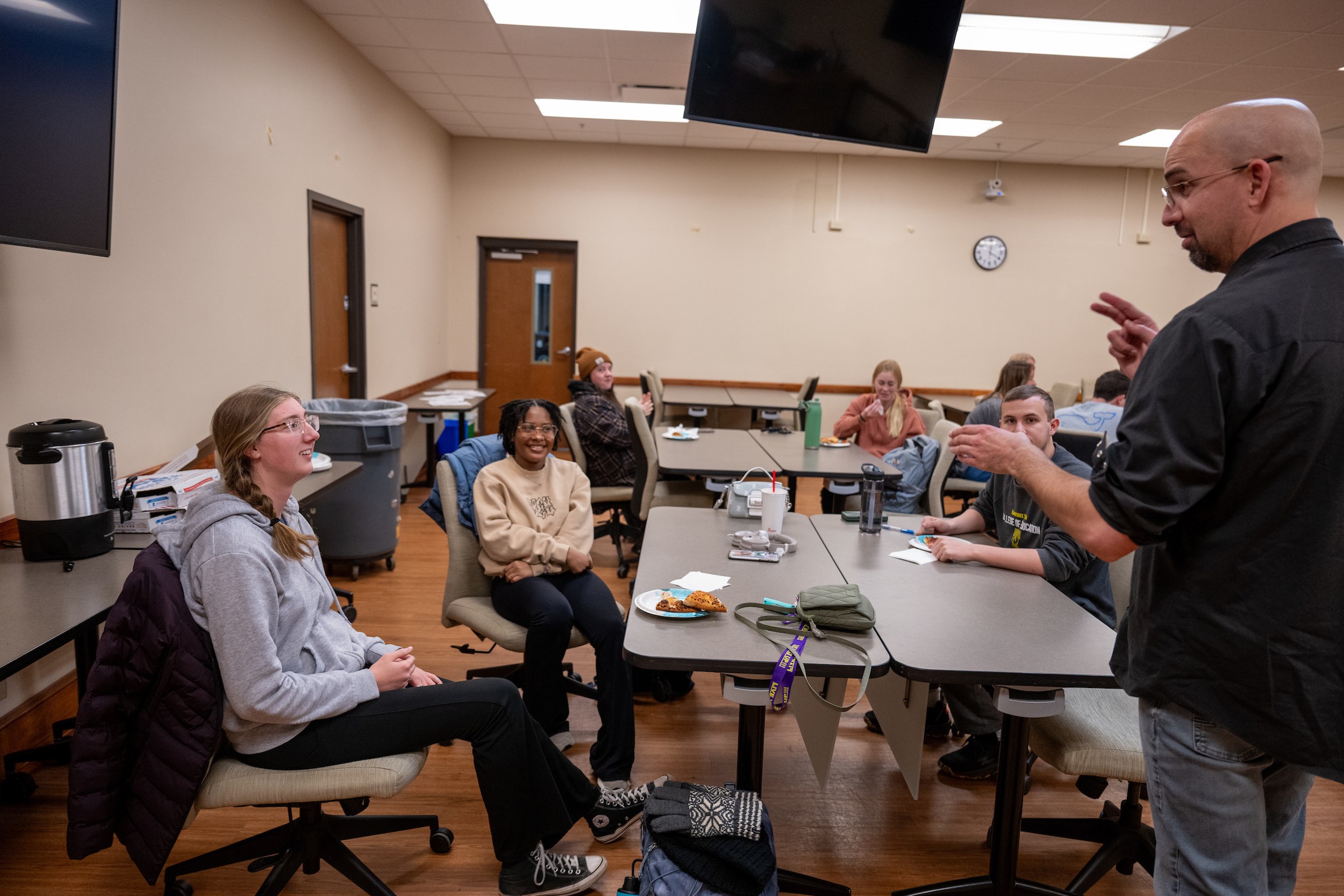
Brett Koch, right, speaks with students in his American Sign Language course.
Learning ASL is worth it, Koch said, and for more reasons than simply communicating
with the deaf community.
“It’s never too late to begin learning it, and if more people learned it, it could
open up opportunities for everyone,” he said.
Koch explains that ASL allows people to communicate across distances without having
to use and raise their voices, connecting people on both individual and professional
levels, and more.
“Speaking from experience, deaf people are appreciative of businesses that communicate
with them via ASL. When a business makes that effort to meet the needs of the deaf
community, that community feels understood. Deaf people will be loyal supporters of
businesses that make them feel understood,” Koch said.
The nature of communication is to bridge gaps, and in that respect, ASL is the same.
“It’s about bridging gaps, one sign at a time,” he concluded. “It’s important to me
that ASL is available to everyone.”
Tech's College of Emerging and Integrative Studies currently offers American Sign
Language I, American Sign Language II and American Sign Language III. Learn more about
the College of Emerging and Integrative Studies at https://www.tntech.edu/cis/.