

The DC Commuting Hack That Runs Itself
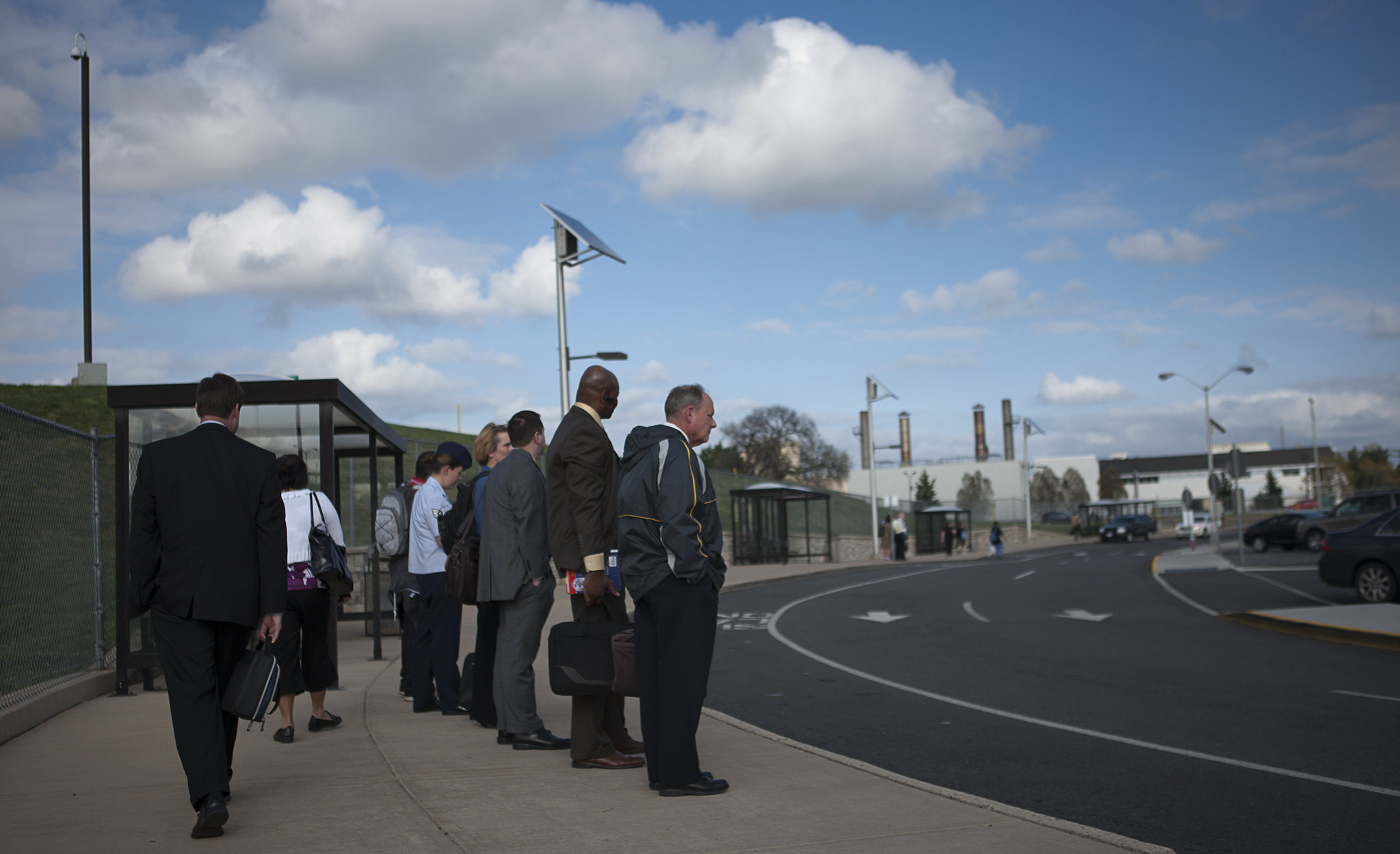
People often don’t cooperate, even if it would be obviously better if they did. We struggle to merge on the highway when a lane is closed, to keep our parks clean, and to figure out where and when to meet for dinner with friends. Most of us assume that getting lots of strangers to cooperate requires an app or at least some kind of official system. Near Washington, DC, however, there’s a commuting trick that works every weekday—with no app, no money, and no boss in charge.
It’s called slugging.
Imagine you’re trying to get into DC from the suburbs, and it’s rush hour. Traffic is truly abysmal. Luckily, there are special carpool lanes (called HOV lanes) that only cars with at least three passengers can use. Access to the HOV lanes can cut hours off the commute each day. This presents an opportunity for enterprising commuters. What if you could go to a parking lot, leave your car there, and ride into the city with two strangers?
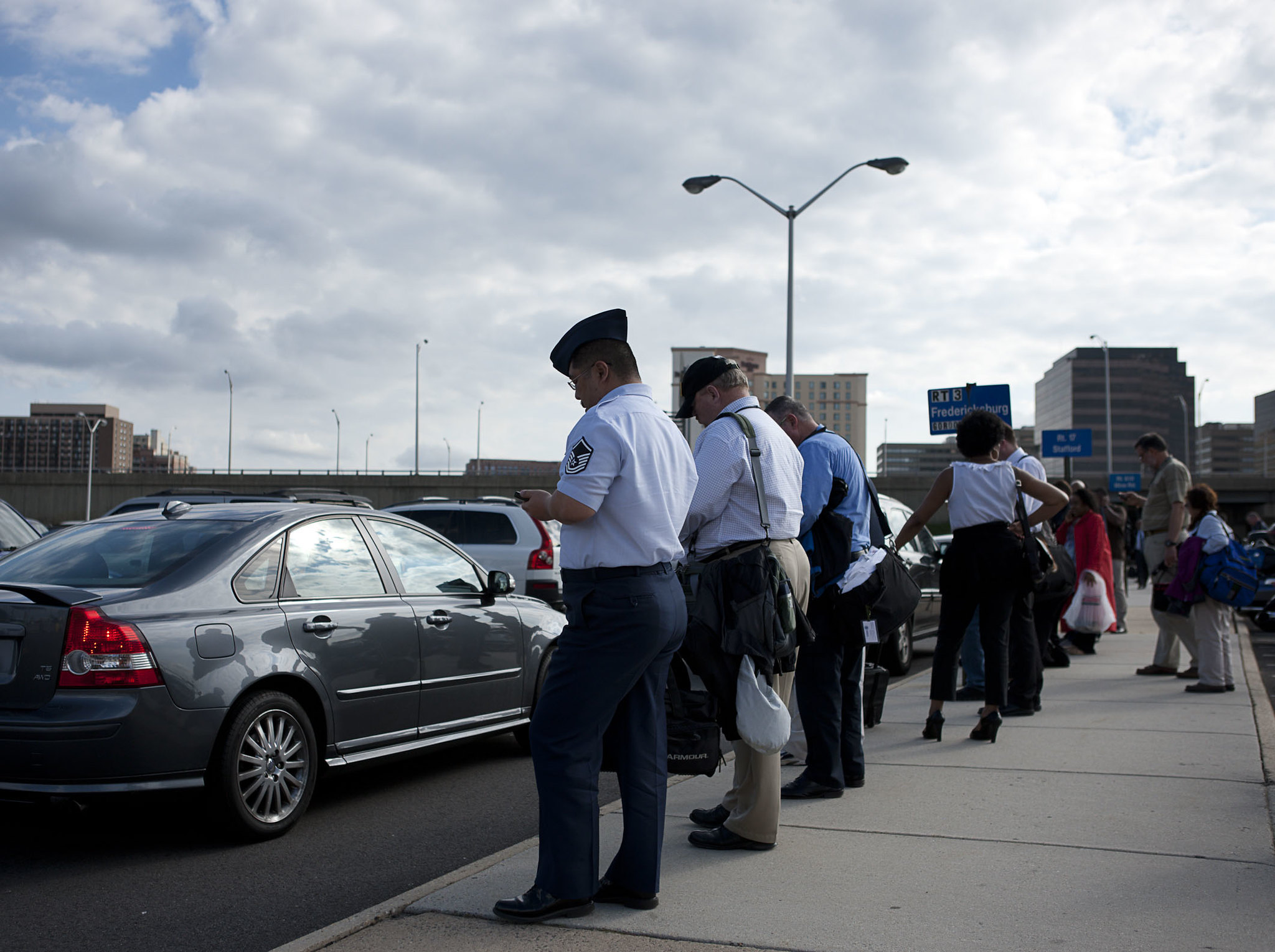
This is exactly how slugging works. Drivers pull up to certain pickup spots. Commuters line up, waiting for a ride to a specific destination in the city, such as the Pentagon or downtown. The driver puts a sign behind their windshield indicating where they’re going. A few riders hop in, and the driver gets to use the faster lane. The riders get a free ride.
Everyone wins. No one pays. No agency or company is involved. No one books ahead. It just…happens.
Why this shouldn’t work (but does)
On paper, this sounds like a recipe for chaos. After all, there are no tickets, no reservations, no official rules, no one in charge. It requires a heroic leap of faith on the part of commuters to leave home for work with just enough time to spare and expect a stranger they’ve never met to stop and pick them up.
You’d expect confusion, long waits, or people taking advantage of the system.
But that’s not what happens. Tens of thousands of commuters have been traveling this way every weekday since the early 1970s. Over that time, slugging has been astonishingly smooth, safe, and efficient. In fact, it’s estimated that as many as 10 percent of DC workers living in Northern Virginia get to work this way.
The invisible rules
Over time, people have figured out how to make this work without anyone telling them what to do. A code has evolved. People line up in an orderly way, usually based on where they’re going. Drivers announce destinations with window signs, and riders self-sort. No money changes hands—that’s just understood. Bad behavior gets shut down quietly—people who break the norms get ignored at the pick-up point next time. Drivers play non-offensive music, or the car is quiet. Riders do not talk unless the driver initiates conversation.
No rulebook. No enforcement. Just shared expectations.
What’s really going on here?
Slugging is a great example of something economists call spontaneous order. That’s a fancy way of saying sometimes, under the right conditions, systems organize themselves without a boss or a plan. Individuals respond to simple incentives such as a shared desire for a faster commute and a reliable, inexpensive ride.
Once enough show up in the same place with those goals, patterns start to form. Those patterns turn into habits. Those habits become “rules.”
And just like that, a system is born. This behavior has been observed throughout the natural world. People form spontaneous orders, but so do primates, mice, termites, and ants.
Why hasn’t an app taken over?
In a world full of ride-sharing apps, slugging is almost weirdly old-school. But that’s part of why it works. It’s fast—no waiting for a match. It’s free. It’s simple. No accounts, no ratings, no fees, no sharing of private information. In a sense, it’s already optimized. There’s not much for an app to improve without making it more complicated. In fact, there have been numerous instances of the slugging community resisting local government efforts to get involved.
A bigger takeaway
Slugging isn’t just a commuting trick—it’s a reminder. We often think order needs to be designed. That someone must build the system, enforce the rules, and keep everything running.
But sometimes, if the incentives are right and people interact enough, order can emerge on its own. Often, these spontaneous orders work much more efficiently than designed systems.
No planner. No platform. No price tag.
Just people figuring it out together.
Dr. Sean Alley is the Chair of the Economics, Finance, and Marketing Department.
Dr. Ferdinand DiFurio is a professor of economics.