

About the Collection
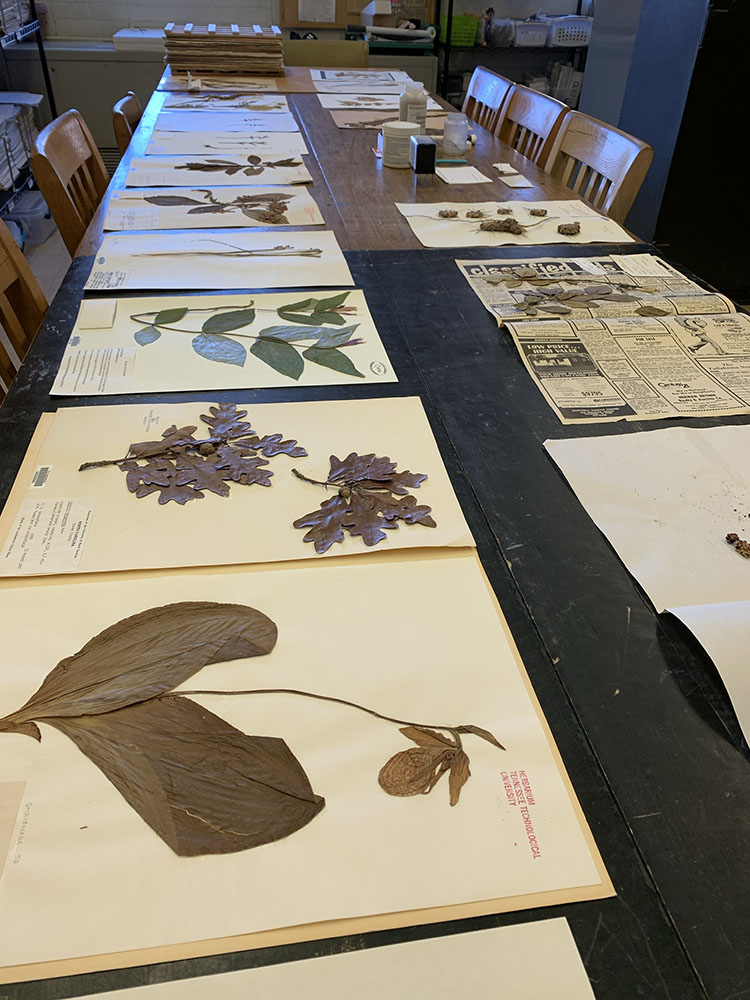 The Hollister Herbarium (HTTU) preserves more than 45,000 botanical specimens documenting
the diversity, distribution, and history of plants in Tennessee and beyond. The collection
includes flowering plants, conifers, ferns and their allies, and smaller holdings
of bryophytes, algae, fungi, and lichens. Specimens are permanently maintained for
public education, scientific research, biodiversity conservation, and the documentation
of regional natural history.
Each specimen consists of a preserved plant accompanied by information about its identity, collector, collection date, and geographic origin. Together, these specimens provide a record of plant life across places and time. Some HTTU specimens are more than a century old and preserve information about habitats and plant populations that may have since changed or disappeared.
Collection at a Glance
- More than 42,000 specimen records currently available online
- 245 plant families represented
- More than 1,200 genera represented
- Approximately 4,000 species represented
- More than 4,200 total taxa, including varieties and subspecies
- More than 38,000 digital records with specimen images
- Specimens collected from the late nineteenth century to the present
- Online statistics are updated as specimens are cataloged, identified, and added to the SERNEC database.
Geographic Strengths
The Hollister Herbarium’s principal geographic strength is Tennessee. More than 31,000 of the specimens currently represented in the online database were collected in the state, accounting for approximately three-quarters of all digitized HTTU records.
The collection provides especially extensive documentation of the Upper Cumberland region and the adjoining Eastern Highland Rim and Cumberland Plateau. The strongest county holdings include Putnam, Jackson, DeKalb, Scott, White, Cumberland, Overton, and Fentress counties. More than 8,600 specimens document Putnam County alone, while nearly 4,900 document Jackson County and more than 3,500 document DeKalb County.
These concentrated regional holdings preserve evidence from forests, wetlands, river systems, barrens, rock outcrops, roadsides, agricultural landscapes, and other natural and human-influenced habitats. They are particularly valuable for studying changes in plant distributions, flowering times, land use, introduced species, and the condition of natural communities over time.
Beyond Tennessee, HTTU holds specimens from every U.S. state. Particularly substantial holdings come from Kentucky, Alabama, North Carolina, South Carolina, New York, Massachusetts, Georgia, Texas, Florida, and Arkansas. Smaller comparative collections represent at least 18 additional countries and territories, including Australia, Canada, Mexico, Nicaragua, Panama, France, New Caledonia, and several countries in Central and South America.
Taxonomic Strengths
The Hollister Herbarium represents a broad range of vascular and nonvascular plants. Its digital records include 245 families, more than 1,200 genera, approximately 4,000 species, and more than 4,200 total taxa when varieties and subspecies are included.
Flowering plants constitute the largest portion of the collection. The most extensively represented families include:
- Asteraceae, the sunflower family: approximately 4,500 specimens
- Lamiaceae, the mint family: approximately 2,750 specimens
- Fabaceae, the pea family: more than 2,000 specimens
- Poaceae, the grass family: approximately 1,700 specimens
- Brassicaceae, the mustard family: more than 1,500 specimens
- Rosaceae, the rose family: approximately 1,500 specimens
- Ranunculaceae, the buttercup family: more than 1,400 specimens
- Cyperaceae, the sedge family: nearly 1,200 specimens
- Ericaceae, the heath family: more than 900 specimens
- Rubiaceae, the coffee and bedstraw family: more than 800 specimens
- Ferns and other seed-free vascular plants are also important components of HTTU. The historic fern collection includes specimens assembled by Dorr R. Bartoo beginning in the 1920s, along with later collections documenting the diversity of the Cumberland Plateau and surrounding regions.
Historical Collections
 The Hollister Herbarium preserves botanical specimens collected across more than a
century, with our oldest specimen collected in 1883. The earliest confirmed specimens
associated with the creation of the Hollister Herbarium include ferns collected by
Dr. Dorr R. Bartoo in 1924. These early collections formed the foundation of the teaching
herbarium that was later developed into the university’s permanent botanical collection.
Historical specimens provide evidence that cannot be recreated. Each properly documented specimen records the occurrence of a plant at a particular place and time. Researchers can compare older and newer collections to investigate changes in plant distributions, flowering periods, habitat conditions, introduced species, and the persistence or disappearance of local populations.
The digital database reflects periods of especially active collecting during the 1960s, 1970s, 1990s, and early 2000s. HTTU continues to add specimens through faculty and student research, floristic inventories, gifts, exchanges with other institutions, and the deposition of vouchers from scientific and conservation projects.
Collectors and Collection Development
The Hollister Herbarium reflects the work of generations of Tennessee Tech faculty members, students, professional botanists, agency personnel, and community collectors. Major contributors represented in the digital database include Felix G. Coe, Richard W. Simmers, Jr., Gordon E. Hunter, Meredith Moore, Claude Bailey, Barbara Goodson, Shawn Krosnick, S. K. Ballal, Sharon Kington, Paul L. Hollister, and Dorr R. Bartoo.
Felix G. Coe and Richard W. Simmers, Jr. are each associated with approximately 4,000 digital records, while Gordon E. Hunter is associated with more than 1,300. These collections contribute substantially to HTTU’s documentation of Tennessee and the southeastern United States.
Many specimens were produced through student fieldwork and collaborative collecting. They therefore document not only regional plant diversity but also Tennessee Tech’s long history of botanical instruction, field research, and public service.
Collector totals are approximate because many historical records retain abbreviated or variant forms of collectors’ names. Standardizing these names and connecting collectors with consistent identifiers are important parts of HTTU’s ongoing database improvement.
Research and Conservation Value
HTTU specimens support research in plant systematics, taxonomy, ecology, conservation, environmental change, and regional floristics. Researchers can use the collection to verify plant identifications, document historical occurrences, compare plant morphology, investigate geographic variation, and evaluate changes in species distributions.
The collection is also a resource for government agencies, conservation organizations, environmental consultants, land managers, educators, naturalists, and members of the public seeking reliable information about plants. Records of rare species and historically collected populations can assist conservation planning and help identify areas where additional field surveys are needed.
Specimens and associated data are available for appropriate research and educational use. Researchers may arrange an on-site visit, request information or images, or request institutional specimen loans.
Teaching and Public Education
The collection is actively used in Tennessee Tech courses and student research. Students learn plant identification, taxonomy, field collection, specimen preparation, collections care, digitization, database management, and the role of natural history collections in contemporary science.
HTTU also uses its collections in guided tours, public programs, school visits, community outreach, and plant-identification assistance. Members of the general public may arrange a visit to explore the collection and learn how preserved plants contribute to science, education, and conservation.
Collections Care
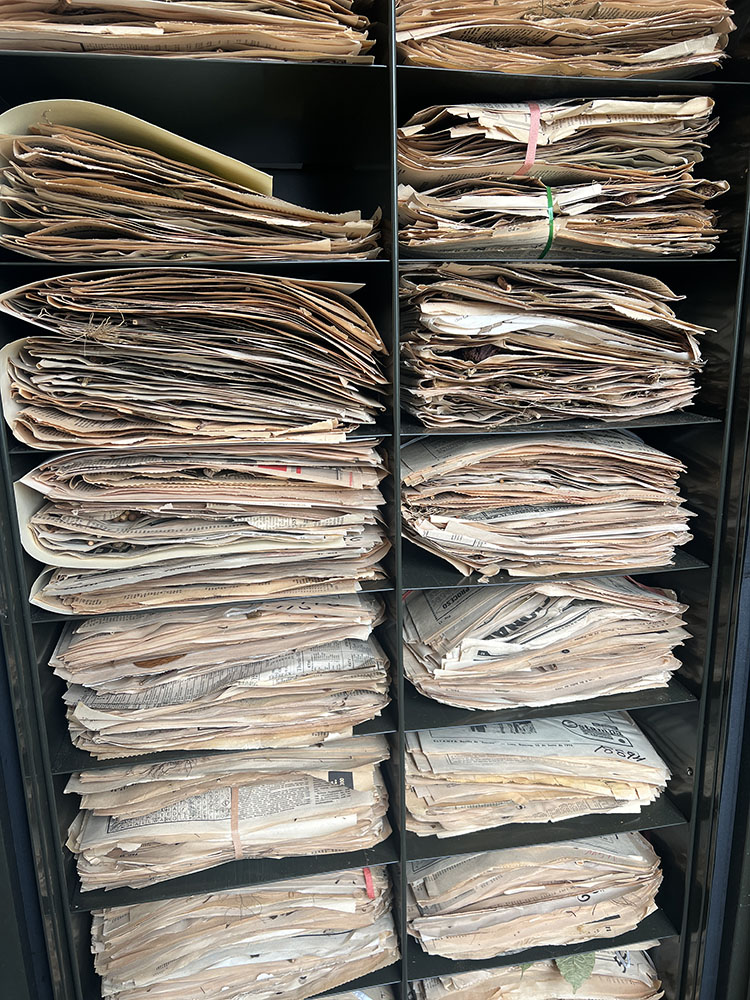
The Hollister Herbarium maintains its specimens as a permanent museum collection. New specimens are accessioned, mounted on archival materials, labeled, cataloged, and filed systematically. Existing specimens are inspected, repaired, rehoused, and updated with taxonomic annotations as needed.
The collection is stored in protective herbarium cabinets and monitored for evidence of insect activity and other threats. Staff and trained students follow established procedures when handling, imaging, databasing, and returning specimens to storage. These practices protect the physical collection while allowing it to remain available for research, education, exhibition, and public use.
Digitization and Online Access
HTTU has made substantial progress in providing digital access to its collections. The Southeastern Regional Network of Expertise and Collections, or SERNEC, currently contains more than 42,000 HTTU records, and approximately 90 percent are associated with specimen images. Approximately 92 percent are identified to species.
Most records were created through a regional mass-digitization project designed to make collections discoverable online. As a result, many are skeletal records rather than complete transcriptions of the information present on specimen labels. More than 16,000 records currently lack a collector in the primary collector field, more than 26,000 lack a structured collection year, and only about five percent have geographic coordinates.
HTTU is working to complete label transcription, standardize collector names and geographic information, correct legacy data errors, add geographic coordinates, reconcile digital records with physical specimens, and establish comprehensive quality-control procedures. This work will transform an extensive image and skeletal-record resource into a more complete and reliable source of biodiversity information.
HTTU data are also shared through the Global Biodiversity Information Facility, or GBIF, where they contribute to international research and biodiversity-data initiatives.
Search HTTU Specimens in SERNEC View the HTTU Dataset in GBIF
Accessing the Collection
The physical collection is available to researchers, educators, students, community organizations, and members of the general public. No Tennessee Tech affiliation is required.
Visitors may view specimens, consult the collection for research or identification, or arrange a guided introduction to the herbarium. Institutional loans, image requests, data questions, and other collections inquiries are also welcome.
To arrange access or request additional information, contact:
Dr. Shawn Krosnick
Director and Curator, Hollister Herbarium
Tennessee Technological University
Pennebaker Hall 204
Cookeville, Tennessee 38505
skrosnick@tntech.edu
931-372-6194