
Computer Science Alumni Spotlight: David Sisterman, Class of 1992
Part 4 of a 40th anniversary series celebrating Tennessee Tech computer science alumni and the advancement of the Department of Computer Science, established in 1986.
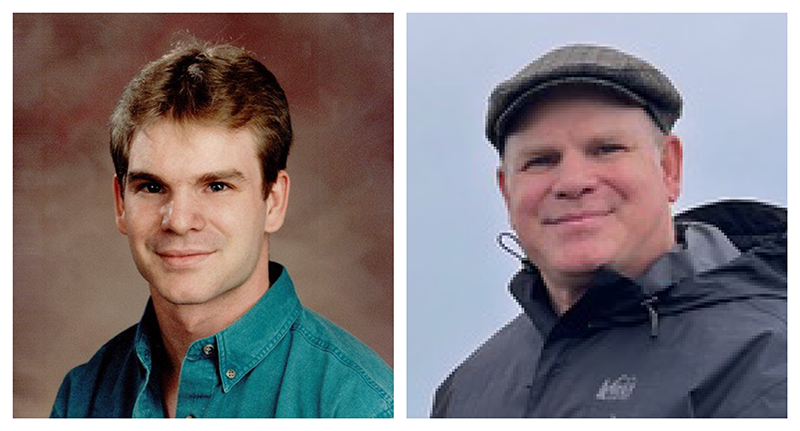
When David Sisterman graduated from Tennessee Tech in 1992, computer science was entering a new era.
“By the late 1980s, the computer science labs at Tennessee Tech were no longer using punch cards – thank goodness!” he recalled.
Sisterman worked in the university’s computer lab, sorting printouts from massive line printers and helping fellow students navigate the VAX (Virtual Address eXtension) systems running the VMS (Virtual Memory System) operating system—back when computing meant shared mainframes, just before personal computers became widespread.
His first programming courses were in Fortran and Pascal, languages that reflected a transition into modern computing.
Technology wasn’t the only thing evolving. Tech’s Department of Computer Science, established in 1986, was working toward accreditation.
When Sisterman switched from electrical engineering to computer science in his third year, the four-year schedule threatened to delay his graduation. So, he convinced the dean and faculty to allow him to complete the curriculum in two years—a decision that led to one of his proudest Tech memories.
“I studied Unix over Christmas break, staying in the lab instead of going home,” he said. “On the first day of the next term, I had to pass the Unix final to be allowed into its successor class. If I failed, I’d have to wait a year for the class to be offered again.”
He and a classmate passed, earning seats in the next-level course the following day.
“I remember the professor thinking it was impossible and afterward treating us both pretty well,” he said. “I’m very proud of that accomplishment. I believe presenting my case to the dean and demonstrating how the standard schedule didn’t really support transfer students helped the department adapt and grow.”
The 1990s brought rapid technological change. Sisterman’s first “college computer” was an IBM 8088 desktop with a monochrome monitor. He saw computing evolve through EGA and VGA graphics, 286 to 486 processors and increasingly powerful motherboards, culminating in Intel’s Pentium processor in 1993, which provided a more stable, longer-lasting architecture.
Outside the classroom, Sisterman and his classmates connected to Bulletin Board Systems (BBS) using dial-up modems for games and chats with people around the world – often tying up the phone line in the process.
After graduation, he began his career at a small defense company in Huntsville, Ala., just as the commercial internet was emerging. Configuring companies for internet access meant working in uncharted territory: “No one knew all the answers back then. Everything was too new.”
Looking back, Sisterman said changing his major to computer science was one of the best decisions of his life.
His advice to today’s students reflects lessons learned in a decade of constant change.
“Don’t think you have to be good at only one area of IT,” he said. “Try to work across many domains: networking, server management, development, middleware, database management, mobility and more. They broaden how you think about related technologies and make you a stronger asset in every new role you take on.”
Professional Highlights
David Sisterman dedicated most of his career to technology leadership in St. Louis, Mo., joining Monsanto, now part of Bayer. In his 25 years with the company, he built and led an operations team focused on streamlining application deployments and monitoring batch systems for data flows. He later co-managed a team of approximately 100 developers before moving into the infrastructure department, where he oversaw web and database servers, email systems and other data transfer platforms. He designed and delivered seminars on creative problem-solving and integrating emerging mobile technologies into business strategy. Prior to his retirement in 2026, he served as a North America data steward lead.
Computer Science in the 1990s
- 1990 – Frank Hadlock serves as the first advisor to ACM ICPC programming teams.
- 1994 – Eric Brown [’93, ’06, ‘26] is hired as the first full-time systems administrator.
- 1995 – Department of Computer Science joins the World Wide Web with first web server.
- 1997 – First Java course is offered as a special topics class.
- 1998 – Tech launches B.S. in computer Engineering, requiring 25 credit hours of computer science coursework, significantly impacting the computer science program.